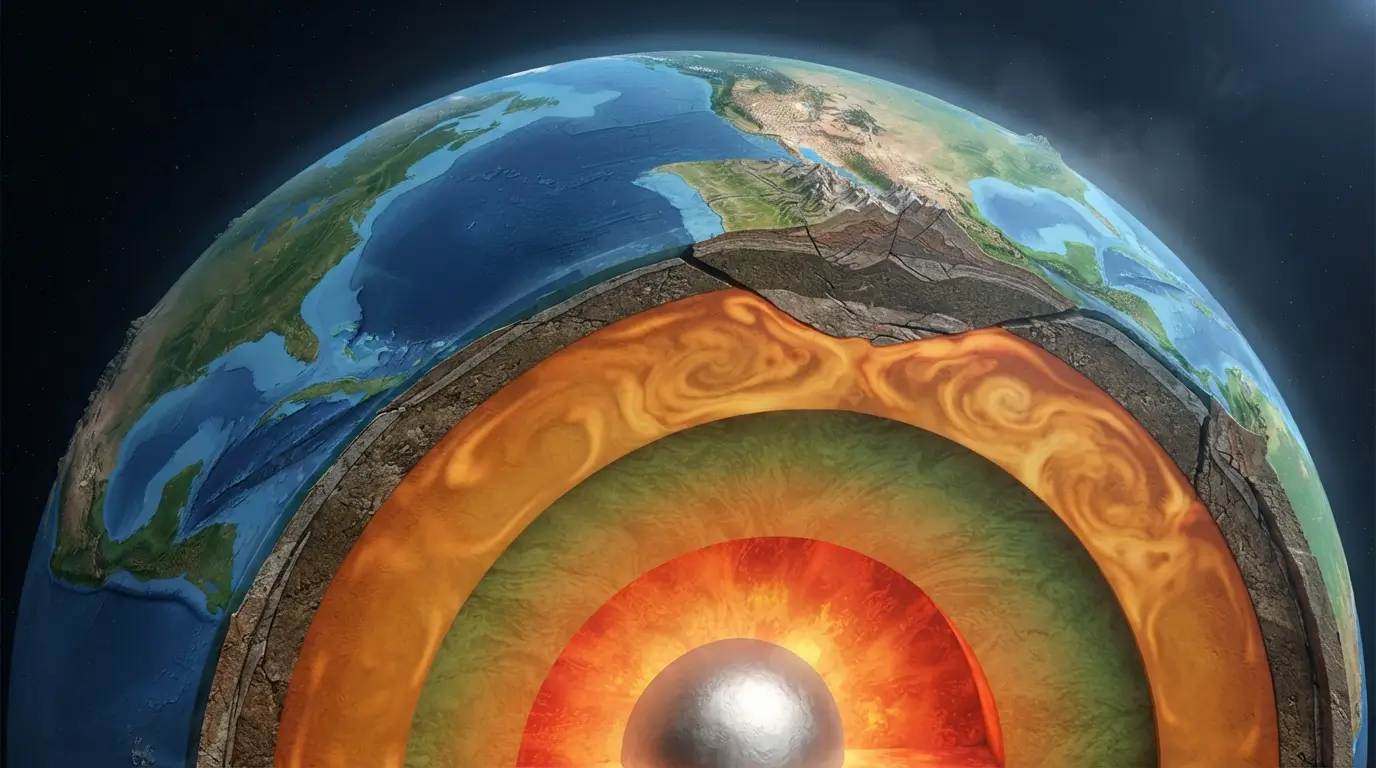
Synonyms of lithosphere can be tricky because the word describes a specific solid layer of Earth. A geology student may encounter it while studying Earth’s structure.
Imagine looking at a diagram of Earth in class. You see the crust, mantle, and several deeper layers. The lithosphere is the strong outer part.
In everyday science writing, synonyms of lithosphere are less common than alternatives such as “rigid outer layer” or “tectonic plate.” Each expression highlights a different feature.
Learning synonyms of lithosphere helps students, bloggers, writers, and English learners explain Earth science clearly. It also improves scientific vocabulary.
What Does “Lithosphere” Really Mean?
The lithosphere is the rigid outer part of Earth that includes the crust and the uppermost solid mantle.
It sits above the softer, mechanically weaker asthenosphere. The lithosphere behaves as a relatively strong layer and is divided into large pieces called tectonic plates.
Simple Definition
The lithosphere is Earth’s rigid outer shell, made up of the crust and the uppermost mantle.
The term comes from scientific language rather than ordinary conversation. Native English speakers usually encounter it in geology, geography, Earth science, environmental science, and education.
Part of Speech
Lithosphere is a noun.
It normally refers to a geological layer or mechanical part of Earth.
What Does the Lithosphere Include?
The lithosphere includes:
- Earth’s crust
- The rigid uppermost mantle
- Tectonic plates that move over the weaker asthenosphere
The boundary between lithosphere and asthenosphere is based mainly on mechanical behavior and temperature rather than simply on a change in rock composition.
Connotative Meaning
Connotation (the emotional or associated meaning a word can carry beyond its literal definition) is limited for lithosphere because it is a technical scientific term.
Positive Tone
Lithosphere does not normally carry a positive emotional meaning. In educational writing, it may suggest stability, structure, and scientific understanding.
Negative Tone
The word itself has no inherently negative connotation. Discussions of earthquakes, volcanoes, and tectonic hazards can create a negative context, but that feeling comes from the subject rather than the word.
Neutral Tone
Lithosphere is overwhelmingly neutral and technical.
A textbook might say:
“The lithosphere consists of the crust and uppermost mantle.”
The statement describes a scientific fact without expressing emotion.
Etymology
The word lithosphere comes from scientific Greek roots.
It combines lithos, meaning “stone” or “rock,” with sphaira, meaning “sphere” or “ball.”
The literal idea is therefore approximately “rock sphere.”
Old English: 450–1100
The word lithosphere did not exist in Old English.
Old English had native words for rock, stone, earth, and land, but modern geological terminology had not yet developed.
Middle English: 1100–1500
The term lithosphere was also not part of ordinary Middle English vocabulary.
Scientific Earth terminology developed much later as geology became a formal field of study.
Modern English: 1500–Present
Modern scientific vocabulary adopted many Greek- and Latin-derived terms.
Lithosphere became established as a geological term during the development of modern Earth science. Scientists use it to describe Earth’s strong outer layer and its role in plate tectonics.
Pronunciation
- US: /ˈlɪθəsfɪr/
- UK: /ˈlɪθəsfɪə/
Syllables
lith-o-sphere
Affixation Pattern of “Lithosphere”
Root: Greek lithos (“stone”) + Greek sphaira (“sphere”)
Prefix: none
Suffix: none in the ordinary English derivational sense
Formation: combining form / scientific compound
The -sphere element also appears in scientific words such as atmosphere, biosphere, and hydrosphere.
Synonyms List
An Important Note About Synonyms of “Lithosphere”
Unlike ordinary words such as big, small, or happy, lithosphere has very few true synonyms.
A true synonym should be interchangeable without changing the core meaning. Terms such as crust, tectonic plate, and upper mantle are not exact synonyms because they describe parts, properties, or related concepts.
To keep the list scientifically accurate, the following terms are grouped according to how closely they relate to lithosphere.
The first group contains the closest alternatives. The later entries are contextual alternatives or closely related geological expressions, not exact replacements.
1. Rigid Outer Shell (Noun Phrase) — US /ˈrɪdʒɪd ˈaʊtər ʃel/ | UK /ˈrɪdʒɪd ˈaʊtə ʃel/
Meaning: Rigid outer shell is a descriptive phrase for the strong outer part of Earth represented by the lithosphere.
Examples:
- The rigid outer shell moves as large plates.
- Scientists study the rigid outer shell to understand plate movement.
2. Rigid Outer Layer (Noun Phrase) — US /ˈrɪdʒɪd ˈaʊtər ˈleɪər/ | UK /ˈrɪdʒɪd ˈaʊtə ˈleɪə/
Meaning: Rigid outer layer describes the strong outer portion of Earth.
Examples:
- The rigid outer layer rests above the asthenosphere.
- Earth’s rigid outer layer is divided into plates.
3. Rocky Outer Shell (Noun Phrase) — US /ˈrɑːki ˈaʊtər ʃel/ | UK /ˈrɒki ˈaʊtə ʃel/
Meaning: Rocky outer shell is a simple descriptive expression for Earth’s solid outer region.
Examples:
- The rocky outer shell contains the crust and upper mantle.
- Tectonic movement affects the rocky outer shell.
4. Solid Outer Shell (Noun Phrase) — US /ˈsɑːlɪd ˈaʊtər ʃel/ | UK /ˈsɒlɪd ˈaʊtə ʃel/
Meaning: Solid outer shell emphasizes the strong physical nature of the lithosphere.
Examples:
- The solid outer shell forms Earth’s rigid exterior.
- Scientists compare the solid outer shell with deeper layers.
5. Lithospheric Shell (Noun Phrase) — US /ˌlɪθəˈsfɪrɪk ʃel/ | UK /ˌlɪθəˈsfɪərɪk ʃel/
Meaning: Lithospheric shell refers directly to the shell-like region that makes up the lithosphere.
Examples:
- The lithospheric shell contains major tectonic plates.
- Heat affects the thickness of the lithospheric shell.
6. Lithospheric Layer (Noun Phrase) — US /ˌlɪθəˈsfɪrɪk ˈleɪər/ | UK /ˌlɪθəˈsfɪərɪk ˈleɪə/
Meaning: Lithospheric layer is a descriptive term for the lithosphere.
Examples:
- The lithospheric layer varies in thickness.
- Oceanic regions contain a distinct lithospheric layer.
7. Rigid Earth Layer (Noun Phrase) — US /ˈrɪdʒɪd ɜːrθ ˈleɪər/ | UK /ˈrɪdʒɪd ɜːθ ˈleɪə/
Meaning: Rigid Earth layer describes the strong outer mechanical layer of Earth.
Examples:
- The rigid Earth layer moves over a weaker zone.
- Researchers examine the rigid Earth layer during plate studies.
8. Outer Rock Layer (Noun Phrase) — US /ˈaʊtər rɑːk ˈleɪər/ | UK /ˈaʊtə rɒk ˈleɪə/
Meaning: Outer rock layer is a broad descriptive phrase for Earth’s rocky exterior.
Examples:
- The outer rock layer contains tectonic plates.
- Earthquakes occur within and around the outer rock layer.
9. Rigid Rock Layer (Noun Phrase) — US /ˈrɪdʒɪd rɑːk ˈleɪər/ | UK /ˈrɪdʒɪd rɒk ˈleɪə/
Meaning: Rigid rock layer emphasizes the strong mechanical behavior of lithospheric rock.
Examples:
- The rigid rock layer can fracture under stress.
- Plate motion changes the rigid rock layer over geological time.
10. Outer Solid Layer (Noun Phrase) — US /ˈaʊtər ˈsɑːlɪd ˈleɪər/ | UK /ˈaʊtə ˈsɒlɪd ˈleɪə/
Meaning: Outer solid layer is a general description of Earth’s strong exterior.
Examples:
- The outer solid layer includes the crust.
- The outer solid layer interacts with deeper Earth materials.
11. Tectonic Shell (Noun Phrase) — US /tekˈtɑːnɪk ʃel/ | UK /tekˈtɒnɪk ʃel/
Meaning: Tectonic shell is a descriptive expression for the part of Earth involved in plate tectonics.
Examples:
- The tectonic shell consists of moving plates.
- Stress accumulates within the tectonic shell.
12. Rigid Tectonic Layer (Noun Phrase) — US /ˈrɪdʒɪd tekˈtɑːnɪk ˈleɪər/ | UK /ˈrɪdʒɪd tekˈtɒnɪk ˈleɪə/
Meaning: Rigid tectonic layer describes the mechanically strong layer that forms tectonic plates.
Examples:
- The rigid tectonic layer moves over the asthenosphere.
- Scientists model the rigid tectonic layer during plate studies.
13. Lithospheric Plate (Noun) — US /ˌlɪθəˈsfɪrɪk pleɪt/ | UK /ˌlɪθəˈsfɪərɪk pleɪt/
Meaning: A lithospheric plate is a large rigid piece of the lithosphere.
Examples:
- A lithospheric plate can contain oceanic and continental crust.
- The lithospheric plate moves slowly over geological time.
14. Tectonic Plate (Noun) — US /tekˈtɑːnɪk pleɪt/ | UK /tekˈtɒnɪk pleɪt/
Meaning: A tectonic plate is a large moving section of Earth’s lithosphere.
Examples:
- The tectonic plate moved a few centimeters during the year.
- Two tectonic plates meet at the boundary.
15. Plate (Noun) — US /pleɪt/ | UK /pleɪt/
Meaning: In geology, a plate is a large rigid piece of lithosphere.
Examples:
- The plate moved beneath another plate.
- Scientists mapped the plate boundary carefully.
16. Lithospheric Plate Fragment (Noun Phrase) — US /ˌlɪθəˈsfɪrɪk pleɪt ˈfræɡmənt/ | UK /ˌlɪθəˈsfɪərɪk pleɪt ˈfræɡmənt/
Meaning: This phrase describes a piece or section of lithosphere that forms part of a larger plate system.
Examples:
- The lithospheric plate fragment shifted along the fault.
- Researchers examined the fragment’s geological history.
17. Continental Lithosphere (Noun) — US /ˌkɑːntəˈnentəl ˈlɪθəsfɪr/ | UK /ˌkɒntɪˈnentəl ˈlɪθəsfɪə/
Meaning: Continental lithosphere is lithosphere associated with continental regions.
Examples:
- Continental lithosphere can be very old.
- Researchers compare continental lithosphere with oceanic lithosphere.
18. Oceanic Lithosphere (Noun) — US /ˌoʊʃiˈænɪk ˈlɪθəsfɪr/ | UK /ˌəʊʃiˈænɪk ˈlɪθəsfɪə/
Meaning: Oceanic lithosphere is lithosphere beneath oceanic regions.
Examples:
- Oceanic lithosphere forms at mid-ocean ridges.
- Older oceanic lithosphere can become denser as it cools.
19. Crust-and-Upper-Mantle Shell (Noun Phrase) — US /krʌst ənd ˈʌpər ˈmæntl ʃel/ | UK /krʌst ənd ˈʌpə ˈmæntl ʃel/
Meaning: This descriptive phrase identifies the two major components of the lithosphere.
Examples:
- The crust-and-upper-mantle shell behaves rigidly.
- The diagram shows the crust-and-upper-mantle shell clearly.
20. Crustal-Mantle Layer (Noun Phrase) — US /ˈkrʌstəl ˈmæntl ˈleɪər/ | UK /ˈkrʌstəl ˈmæntl ˈleɪə/
Meaning: Crustal-mantle layer is a broad descriptive expression referring to the crust and upper mantle together.
Examples:
- The crustal-mantle layer forms the rigid exterior.
- Scientists investigate changes in the crustal-mantle layer.
21. Upper Rigid Layer (Noun Phrase) — US /ˈʌpər ˈrɪdʒɪd ˈleɪər/ | UK /ˈʌpə ˈrɪdʒɪd ˈleɪə/
Meaning: Upper rigid layer describes Earth’s strong outer mechanical zone.
Examples:
- The upper rigid layer forms tectonic plates.
- Heat gradually changes the properties of the upper rigid layer.
22. Rigid Upper Mantle (Noun Phrase) — US /ˈrɪdʒɪd ˈʌpər ˈmæntl/ | UK /ˈrɪdʒɪd ˈʌpə ˈmæntl/
Meaning: Rigid upper mantle refers specifically to the strong uppermost mantle that forms part of the lithosphere.
Examples:
- The rigid upper mantle lies beneath the crust.
- The rigid upper mantle forms part of the tectonic plate.
23. Uppermost Mantle (Noun Phrase) — US /ˈʌpərmoʊst ˈmæntl/ | UK /ˈʌpəməʊst ˈmæntl/
Meaning: The uppermost mantle is the highest part of Earth’s mantle and includes a portion of the lithosphere.
Examples:
- The uppermost mantle contains solid rock.
- Some lithosphere consists of uppermost mantle material.
24. Lithospheric Mantle (Noun) — US /ˌlɪθəˈsfɪrɪk ˈmæntl/ | UK /ˌlɪθəˈsfɪərɪk ˈmæntl/
Meaning: Lithospheric mantle is the rigid mantle portion that belongs to the lithosphere.
Examples:
- The lithospheric mantle lies below the crust.
- Oceanic lithospheric mantle changes as it cools.
25. Mantle Lithosphere (Noun) — US /ˈmæntl ˈlɪθəsfɪr/ | UK /ˈmæntl ˈlɪθəsfɪə/
Meaning: Mantle lithosphere refers to the mantle portion of the lithosphere.
Examples:
- The mantle lithosphere can extend beneath continental crust.
- Scientists use seismic data to study mantle lithosphere.
26. Continental Plate (Noun) — US /ˌkɑːntəˈnentəl pleɪt/ | UK /ˌkɒntɪˈnentəl pleɪt/
Meaning: A continental plate is a tectonic plate containing substantial continental lithosphere.
Examples:
- The continental plate carries a large landmass.
- The continental plate interacts with an oceanic plate.
27. Oceanic Plate (Noun) — US /ˌoʊʃiˈænɪk pleɪt/ | UK /ˌəʊʃiˈænɪk pleɪt/
Meaning: An oceanic plate is a tectonic plate dominated by oceanic lithosphere.
Examples:
- The oceanic plate moves toward the trench.
- An oceanic plate can sink beneath another plate.
28. Tectonic Slab (Noun) — US /tekˈtɑːnɪk slæb/ | UK /tekˈtɒnɪk slæb/
Meaning: A tectonic slab is a large solid piece of tectonic material, especially in subduction settings.
Examples:
- The tectonic slab descended beneath another plate.
- Seismic activity revealed the moving slab.
29. Lithospheric Slab (Noun) — US /ˌlɪθəˈsfɪrɪk slæb/ | UK /ˌlɪθəˈsfɪərɪk slæb/
Meaning: A lithospheric slab is a slab-like portion of lithosphere, often discussed during subduction.
Examples:
- The lithospheric slab descended into the mantle.
- Scientists traced the slab using seismic waves.
30. Tectonic Unit (Noun) — US /tekˈtɑːnɪk ˈjuːnɪt/ | UK /tekˈtɒnɪk ˈjuːnɪt/
Meaning: A tectonic unit is a geological body defined by its tectonic setting or history.
Examples:
- The region contains several tectonic units.
- Researchers mapped each tectonic unit separately.
31. Crust (Noun) — US /krʌst/ | UK /krʌst/
Meaning: The crust is Earth’s outermost compositional layer and forms part of the lithosphere.
Examples:
- Oceanic crust is generally thinner than continental crust.
- The crust rests above the mantle.
Accuracy note: Crust is not an exact synonym for lithosphere because the lithosphere includes crust plus rigid uppermost mantle.
32. Continental Crust (Noun) — US /ˌkɑːntəˈnentəl krʌst/ | UK /ˌkɒntɪˈnentəl krʌst/
Meaning: Continental crust is the thicker crust underlying most continents.
Examples:
- Continental crust can survive for billions of years.
- Scientists study continental crust through rock samples.
33. Oceanic Crust (Noun) — US /ˌoʊʃiˈænɪk krʌst/ | UK /ˌəʊʃiˈænɪk krʌst/
Meaning: Oceanic crust is the relatively thin crust beneath ocean basins.
Examples:
- Oceanic crust forms at spreading centers.
- New oceanic crust develops along mid-ocean ridges.
34. Earth’s Outer Layer (Noun Phrase) — US /ɜːrθs ˈaʊtər ˈleɪər/ | UK /ɜːθs ˈaʊtə ˈleɪə/
Meaning: Earth’s outer layer is a broad phrase that can describe the lithosphere in simple educational writing.
Examples:
- Earth’s outer layer is divided into moving plates.
- The diagram labels Earth’s outer layer.
35. Earth’s Rigid Exterior (Noun Phrase) — US /ɜːrθs ˈrɪdʒɪd ɪkˈstɪriər/ | UK /ɜːθs ˈrɪdʒɪd ɪkˈstɪəriə/
Meaning: Earth’s rigid exterior is a descriptive expression for the mechanically strong outer region.
Examples:
- Earth’s rigid exterior moves over a weaker layer.
- Earthquakes can occur within this rigid exterior.
36. Rocky Exterior (Noun Phrase) — US /ˈrɑːki ɪkˈstɪriər/ | UK /ˈrɒki ɪkˈstɪəriə/
Meaning: Rocky exterior describes Earth’s solid rocky outside in simple language.
Examples:
- The rocky exterior is divided into plates.
- Scientists investigate the rocky exterior through seismic studies.
37. Solid Earth Shell (Noun Phrase) — US /ˈsɑːlɪd ɜːrθ ʃel/ | UK /ˈsɒlɪd ɜːθ ʃel/
Meaning: Solid Earth shell is a descriptive phrase emphasizing the solid outer part of Earth.
Examples:
- The solid Earth shell responds to tectonic forces.
- The solid Earth shell contains major plate boundaries.
38. Mechanical Lithosphere (Noun) — US /məˈkænɪkəl ˈlɪθəsfɪr/ | UK /məˈkænɪkəl ˈlɪθəsfɪə/
Meaning: Mechanical lithosphere emphasizes the lithosphere as a mechanically strong layer.
Examples:
- The mechanical lithosphere behaves differently from the asthenosphere.
- Temperature influences the thickness of the mechanical lithosphere.
39. Tectonosphere (Noun) — US /tekˈtɑːnəˌsfɪr/ | UK /tekˈtɒnəˌsfɪə/
Meaning: Tectonosphere is a specialized geological term that may describe the tectonically active outer region of Earth.
Examples:
- Some scientific discussions use tectonosphere in a specialized context.
- The researcher examined the tectonosphere using geological models.
Accuracy note: This is not a standard interchangeable synonym for lithosphere in ordinary geology.
40. Geosphere (Noun) — US /ˈdʒiːoʊˌsfɪr/ | UK /ˈdʒiːəʊˌsfɪə/
Meaning: Geosphere is a broad term for the solid Earth system rather than specifically the lithosphere.
Examples:
- The geosphere interacts with the atmosphere.
- Earth science examines relationships among the geosphere and other systems.
Accuracy note: Geosphere is much broader than lithosphere.
41. Solid Earth (Noun Phrase) — US /ˈsɑːlɪd ɜːrθ/ | UK /ˈsɒlɪd ɜːθ/
Meaning: Solid Earth refers broadly to Earth’s rocky and metallic interior rather than only its outer shell.
Examples:
- Scientists use seismic waves to study the solid Earth.
- The solid Earth contains several distinct layers.
42. Upper Earth (Noun Phrase) — US /ˈʌpər ɜːrθ/ | UK /ˈʌpə ɜːθ/
Meaning: Upper Earth is a broad descriptive phrase for Earth’s upper regions.
Examples:
- The study focuses on processes in the upper Earth.
- Heat moves through different parts of the upper Earth.
43. Plate System (Noun Phrase) — US /pleɪt ˈsɪstəm/ | UK /pleɪt ˈsɪstəm/
Meaning: Plate system refers to the interconnected system of tectonic plates that make up the lithosphere.
Examples:
- The plate system changes over geological time.
- Scientists track movement across the plate system.
44. Tectonic Framework (Noun Phrase) — US /tekˈtɑːnɪk ˈfreɪmwɜːrk/ | UK /tekˈtɒnɪk ˈfreɪmwɜːk/
Meaning: Tectonic framework describes the arrangement and movement of geological structures and plates.
Examples:
- The tectonic framework explains the area’s earthquake activity.
- Researchers reconstructed the region’s tectonic framework.
45. Outer Tectonic Layer (Noun Phrase) — US /ˈaʊtər tekˈtɑːnɪk ˈleɪər/ | UK /ˈaʊtə tekˈtɒnɪk ˈleɪə/
Meaning: Outer tectonic layer is a descriptive phrase for the rigid outer part involved in plate tectonics.
Examples:
- The outer tectonic layer contains large plates.
- Movement in the outer tectonic layer can produce earthquakes.
Synonyms of “Lithosphere” by Tone
Because lithosphere is a technical scientific noun, its alternatives are better grouped by precision and register than emotional tone.
Neutral and Scientific
These are appropriate for textbooks, educational websites, and general science writing:
- Lithospheric shell
- Lithospheric layer
- Rigid outer layer
- Rigid outer shell
- Lithospheric mantle
- Mechanical lithosphere
- Tectonic plate
- Oceanic lithosphere
- Continental lithosphere
Simple and Beginner-Friendly
These expressions can make explanations easier for general readers:
- Earth’s rigid exterior
- Earth’s outer layer
- Rocky outer shell
- Rocky exterior
- Solid outer layer
- Rigid rock layer
Specialized
These require more geological knowledge:
- Lithospheric slab
- Tectonic slab
- Lithospheric mantle
- Uppermost mantle
- Tectonic unit
- Tectonic framework
- Mechanical lithosphere
Broad Rather Than Exact
These terms should not replace lithosphere without checking the context:
- Crust
- Geosphere
- Solid Earth
- Continental crust
- Oceanic crust
- Plate system
Why Tone and Precision Matter
With technical vocabulary, the biggest issue is often not emotional tone but scientific precision.
For example, “rocky outer shell” is easy for beginners to understand. However, “lithosphere” is more precise because it identifies a particular mechanical layer.
“Lithosphere” vs Close Alternatives
Lithosphere vs Crust
The crust is Earth’s outermost compositional layer.
The lithosphere includes the crust plus the rigid uppermost mantle.
Therefore, calling the crust a synonym for lithosphere can create a scientific error.
Lithosphere vs Tectonic Plate
A tectonic plate is a large piece of the lithosphere.
The lithosphere is the larger layer or mechanical shell. A tectonic plate is one moving section of that shell.
Therefore:
Lithosphere = the rigid outer layer
Tectonic plate = a large piece of that layer
Lithosphere vs Asthenosphere
These terms describe different mechanical zones.
The lithosphere is relatively rigid and strong.
The asthenosphere is hotter and mechanically weaker, allowing the lithospheric plates to move over it.
So, asthenosphere is not a synonym for lithosphere.
How “Lithosphere” Changes by Context
Daily Conversation
Most people do not use lithosphere in ordinary daily conversation.
Instead, a speaker might say:
“Earth’s outer rocky layer.”
This simpler expression communicates the general idea without requiring specialized vocabulary.
Writing or Blogging
Bloggers can introduce the scientific term first and then explain it with a descriptive alternative.
For example:
“The lithosphere, or Earth’s rigid outer shell, is divided into tectonic plates.”
This approach helps general readers understand the technical word immediately.
Professional or Academic Tone
Scientific writing should normally use lithosphere rather than an informal substitute.
A geology paper might discuss:
- lithospheric thickness
- lithospheric plates
- continental lithosphere
- oceanic lithosphere
- lithospheric mantle
Precision matters more than stylistic variation in technical writing.
Creative or Informal Use
Creative educational content can use phrases such as Earth’s rocky outer shell or the planet’s rigid exterior.
These expressions can make a difficult concept easier to visualize.
However, they should not replace the technical term when scientific precision matters.
Common Mistakes & Native Usage
Mistake 1: Calling the Crust the Lithosphere
This is one of the most important mistakes to avoid.
The crust forms part of the lithosphere, but the lithosphere also contains rigid uppermost mantle.
Mistake 2: Calling the Mantle the Lithosphere
The entire mantle is not lithosphere.
Only its rigid uppermost portion forms part of the lithosphere.
Mistake 3: Treating Tectonic Plate as an Exact Synonym
A tectonic plate is a piece of lithosphere.
The two concepts are closely connected but not identical.
Mistake 4: Using “Outer Layer” Without Context
“Outer layer” can refer to several things.
It might mean crust, lithosphere, atmosphere, or another planetary layer.
Use rigid outer layer when you specifically mean the lithosphere.
Mistake 5: Using Geosphere as a Direct Replacement
Geosphere usually refers to the solid Earth system more broadly.
It does not specifically identify the lithosphere.
Register Notes
Lithosphere is formal and scientific.
Lithospheric layer is technical but explanatory.
Rigid outer shell is neutral and accessible.
Rocky outer layer is informal and beginner-friendly.
Tectonic plate is technical but very common in general Earth science.
Notwithstanding terms such as “tectonosphere” should not be used casually as direct replacements unless the specific scientific context supports them.
Real-Life Mini Scenarios
Workplace
A science teacher prepares a presentation for students.
She writes:
“The lithosphere is Earth’s rigid outer shell and is divided into tectonic plates.”
The descriptive phrase makes the technical term easier to understand.
Social Situation
Someone asks what causes earthquakes.
A simple explanation might be:
“Earth’s rigid outer layer is broken into plates, and movement along plate boundaries can cause earthquakes.”
The phrase is easier for a general audience than immediately using several technical terms.
Media and Pop Culture
A documentary may show Earth’s interior using a colorful cross-section.
The narrator might explain the lithosphere as the rigid outer layer before introducing plate tectonics.
This helps viewers connect the technical term with a visual concept.
Writing and Storytelling
A science writer could describe Earth as having a rocky outer shell that moves in enormous pieces.
The writer can then introduce the scientific name: lithosphere.
Why Learning Synonyms of Lithosphere Matters
Learning alternatives to a scientific word does not mean replacing the technical term everywhere.
Instead, it helps you understand the different ways writers explain the same scientific concept.
For example, lithosphere provides precision.
Rigid outer shell provides accessibility.
Tectonic plate identifies a major component of the system.
Lithospheric mantle identifies a particular part of the lithosphere.
This distinction is especially useful for students and content writers.
It allows you to simplify an explanation without accidentally changing the science.
Frequently Asked Questions
What is the closest synonym for lithosphere?
There is no perfect everyday synonym. Rigid outer shell, rigid outer layer, and lithospheric shell are among the closest descriptive alternatives.
Is crust a synonym for lithosphere?
No. The crust is part of the lithosphere. The lithosphere also includes the rigid uppermost mantle.
Is tectonic plate a synonym for lithosphere?
No. A tectonic plate is a large piece of lithosphere.
What is another name for the lithosphere?
In beginner-friendly writing, Earth’s rigid outer layer or Earth’s rigid outer shell can explain the concept. In scientific writing, lithosphere remains the preferred precise term.
What is the opposite of lithosphere?
The asthenosphere is often presented as the mechanically weaker layer beneath the lithosphere. It is not a strict “opposite,” but it provides an important contrast in plate-tectonic discussions.
What are the two main parts of the lithosphere?
The lithosphere consists of the crust and the rigid uppermost mantle.
What is the difference between lithosphere and geosphere?
The lithosphere is a specific rigid outer part of Earth. Geosphere is a broader term referring to Earth’s solid components.
Why does the lithosphere move?
The lithosphere is divided into tectonic plates that move relative to one another. Their movement is associated with processes occurring within Earth’s interior and interactions between plates.
Is the lithosphere solid?
Yes. The lithosphere is predominantly solid and mechanically rigid compared with the underlying asthenosphere.
Is the lithosphere the same thickness everywhere?
No. Its thickness varies depending on factors such as whether it is oceanic or continental and the thermal and geological history of the region.
Practice Exercise
Choose the option that best fits each question.
1. Which term most directly describes Earth’s strong outer mechanical layer?
A. Lithosphere
B. Atmosphere
C. Hydrosphere
D. Core
2. Which statement correctly describes the crust?
A. It includes the entire mantle.
B. It forms part of the lithosphere.
C. Another name for the asthenosphere.
D. It surrounds the atmosphere.
3. What is a tectonic plate?
A. A large piece of lithosphere
B. A layer of atmosphere
C. A type of ocean current
D. A section of Earth’s core
4. Which phrase is easiest for a beginner to understand?
A. Rigid outer shell
B. Lithospheric mantle
C. Tectonic framework
D. Lithospheric slab
5. Which term is more precise in academic geology?
A. Rocky outside
B. Lithosphere
C. Earth’s shell
D. Outer rock
6. Which layer is mechanically weaker than the lithosphere?
A. Asthenosphere
B. Crust
C. Inner core
D. Oceanic crust
7. Which term refers specifically to the mantle portion of the lithosphere?
A. Lithospheric mantle
B. Atmosphere
C. Continental crust
D. Geosphere
8. Which statement is scientifically accurate?
A. The lithosphere consists only of crust.
B. The lithosphere includes crust and rigid uppermost mantle.
C. The lithosphere is entirely liquid.
D. The lithosphere is another name for the core.
9. Which expression is a descriptive alternative rather than a strict scientific synonym?
A. Rigid outer layer
B. Lithosphere
C. Lithosphere
10. Which term is broader than lithosphere?
A. Geosphere
B. Lithospheric mantle
C. Tectonic plate
D. Oceanic lithosphere
11. Which term describes lithosphere beneath oceanic regions?
A. Oceanic lithosphere
B. Continental crust
C. Inner core
D. Atmosphere
12. Which term describes lithosphere associated with continents?
A. Continental lithosphere
B. Oceanic crust
C. Hydrosphere
D. Asthenosphere
13. Why should writers avoid treating “crust” and “lithosphere” as identical?
A. They are completely unrelated.
B. The lithosphere includes more than the crust.
C. The crust is liquid.
D. The lithosphere is only atmosphere.
14. Which phrase emphasizes the solid nature of the lithosphere?
A. Solid outer shell
B. Liquid core
C. Gas layer
D. Water sphere
15. Which word should normally be preferred in a technical geology paper?
A. Lithosphere
B. Rocky outside
C. Earth’s shell
D. Stone layer
Reflection Task
Explain Lithosphere in Your Own Words
Write two short explanations of the lithosphere.
First, explain it as if you were teaching a young student. Then explain it as if you were writing a geology assignment.
Notice how the vocabulary changes while the scientific meaning stays accurate.
Answer Key: 1-A | 2-B | 3-A | 4-A | 5-B | 6-A | 7-A | 8-B | 9-A | 10-A | 11-A | 12-A | 13-B | 14-A | 15-A
Conclusion
Understanding synonyms of lithosphere is mainly about learning precision. The word has a specific scientific meaning that simple alternatives cannot always reproduce.
Terms such as rigid outer shell, rigid outer layer, and lithospheric shell can make explanations easier. However, they should retain the original scientific idea.
Words such as crust, tectonic plate, and lithospheric mantle describe related concepts rather than being exact synonyms. Knowing this difference improves scientific writing.
Practice using these terms in essays, study notes, blog posts, and explanations. The more carefully you choose each word, the clearer your Earth science communication becomes.

Evelyn Hartwell is an English vocabulary writer who focuses on clear, practical language for learners and everyday readers. Her writing explores synonyms, word meanings, pronunciation, tone, and natural usage. She believes that learning vocabulary should be simple, useful, and enjoyable. Her articles are designed to help students, bloggers, and English learners choose the right words with greater confidence.