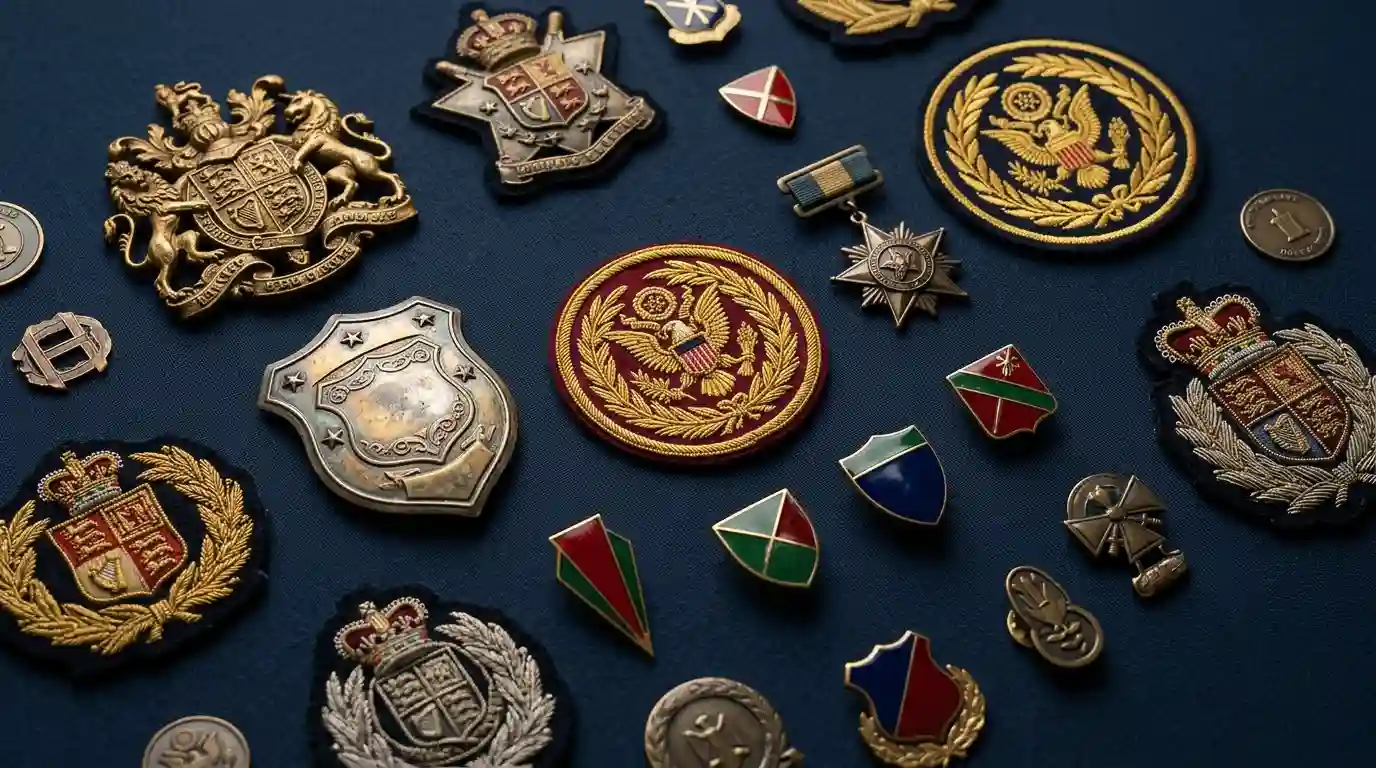
Synonyms for insignia become useful when you need to describe a badge, emblem, or special mark without repeating the same word. A uniform patch is a simple example.
A police badge, military emblem, school crest, or company symbol can all identify a person or group. The right word depends on what the mark represents.
The word is common in military, organizational, historical, fashion, and heraldic writing. Learning its alternatives gives students and writers more precise vocabulary.
Using synonyms for insignia can make essays, blogs, descriptions, and everyday English more varied. This guide explains which alternatives fit each situation best.
What Does “Insignia” Really Mean?
Insignia refers to a sign, badge, emblem, symbol, or other identifying mark that shows a person’s rank, membership, authority, affiliation, or identity.
In simple English, insignia means a special mark or symbol used to identify a person, organization, group, rank, or position.
For example, a military officer may wear insignia showing their rank. A school may have an insignia representing its identity. A club may use an emblem as its identifying mark.
The word can refer to a physical object, such as a badge or patch, or to a visible design that carries an identifying meaning.
Part of Speech
Insignia is primarily a noun.
It can refer to one identifying mark or, traditionally, a set of identifying marks. In modern English, insignia is commonly used as both singular and plural, although insignias is also found as a regular plural in contemporary usage.
Examples:
- The officer wore military insignia on his uniform.
- The university’s insignia appeared on the official documents.
Connotative Meaning of Insignia
Connotation means the emotional or cultural feeling associated with a word beyond its basic dictionary meaning.
Positive Tone
Insignia can have a positive or prestigious tone when it represents achievement, honor, rank, membership, or authority.
For example, a military insignia may suggest service and accomplishment.
Negative Tone
The word itself is usually neutral. However, an insignia connected with an unpopular organization can carry negative associations because of what the symbol represents.
Neutral Tone
In most factual writing, insignia is neutral.
For example:
- The uniform displayed the organization’s insignia.
Here, the word simply identifies a symbol or mark.
Etymology of Insignia
The English word insignia comes from Latin insignia, the plural neuter form of insigne, meaning a distinctive mark, badge, sign, or distinguishing symbol.
The Latin word is connected with insignis, meaning “marked,” “distinguished,” or “conspicuous.”
The history of insignia is different from native Old English vocabulary because the word entered English much later through learned Latin usage.
Old English: 450–1100
The modern word insignia was not part of ordinary Old English. Anglo-Saxon speakers used native terms for signs, marks, badges, and identifying symbols.
Middle English: 1100–1500
Latin and French vocabulary increasingly influenced English during this period. Words relating to authority, heraldry, religion, government, and organizations often entered through learned or French channels.
Modern English: 1500–Present
Insignia became established in English as a formal term for distinguishing marks, especially those associated with rank, military service, organizations, heraldry, and official identity.
Today, it remains common in military, historical, institutional, and descriptive writing.
Pronunciation of Insignia
- US: /ɪnˈsɪɡ.ni.ə/
- UK: /ɪnˈsɪɡ.ni.ə/
Syllables
in-sig-ni-a
Affixation Pattern of Insignia
- Root: Latin sign- meaning “mark” or “sign”
- Prefix: in-, historically part of the Latin formation rather than a freely productive English prefix in this word
- Suffix: -ia, part of the Latin noun formation
The underlying Latin connection with sign is important because insignia fundamentally refers to something that marks or identifies.
45+ Synonyms for Insignia
The following alternatives include close synonyms and context-specific equivalents. Emblem, badge, symbol, mark, device, and identifying mark are especially useful general alternatives.
Some other terms refer to particular kinds of insignia rather than being interchangeable in every sentence. That distinction matters for accurate English.
1. Emblem
US: /ˈem.bləm/
UK: /ˈem.bləm/
Meaning: An emblem is a visual symbol that represents a person, organization, group, idea, or identity.
Examples:
- The eagle is the organization’s official emblem.
- She wore the club emblem on her jacket.
2. Badge
US: /bædʒ/
UK: /bædʒ/
Meaning: A badge is a small identifying mark or object worn or displayed to show membership, rank, or authority.
Examples:
- The officer showed his badge.
- Each student received a school badge.
3. Symbol
US: /ˈsɪm.bəl/
UK: /ˈsɪm.bəl/
Meaning: A symbol is a sign or image that represents something else.
Examples:
- The dove is a symbol of peace.
- The group chose a tree as its symbol.
4. Mark
US: /mɑːrk/
UK: /mɑːk/
Meaning: A mark is a visible sign or design that can identify something or someone.
Examples:
- The mark appeared on every official document.
- The uniform had a distinctive mark.
5. Device
US: /dɪˈvaɪs/
UK: /dɪˈvaɪs/
Meaning: A device can be a distinctive design or figure used as an identifying emblem.
Examples:
- The family crest featured a unique device.
- The royal device appeared on the seal.
6. Crest
US: /krest/
UK: /krest/
Meaning: A crest is a distinctive heraldic design associated with a person, family, institution, or organization.
Examples:
- The school crest was embroidered on the blazer.
- The family crest appeared above the doorway.
7. Logo
US: /ˈloʊ.ɡoʊ/
UK: /ˈləʊ.ɡəʊ/
Meaning: A logo is a distinctive design used to identify a company, organization, product, or group.
Examples:
- The club placed its logo on every shirt.
- The company logo was printed on the sign.
8. Seal
US: /siːl/
UK: /siːl/
Meaning: A seal is an official symbol or design used to authenticate or represent an organization or authority.
Examples:
- The university seal appeared on the certificate.
- The official seal was engraved in the document.
9. Insignum
US: /ɪnˈsɪɡ.nəm/
UK: /ɪnˈsɪɡ.nəm/
Meaning: Insignum is a rare Latin-derived term referring to a distinguishing mark or sign.
Examples:
- The historical text describes an insignum of authority.
- Researchers examined the ancient insignum.
10. Ensign
US: /ˈen.saɪn/
UK: /ˈen.saɪn/
Meaning: An ensign is a flag or identifying symbol associated with a nation, organization, or military force.
Examples:
- The ship flew its national ensign.
- The naval ensign was raised at dawn.
11. Sign
US: /saɪn/
UK: /saɪn/
Meaning: A sign is something visible or recognizable that communicates information or identity.
Examples:
- The symbol became a sign of membership.
- The mark was a sign of authority.
12. Identifying Mark
US: /aɪˈden.təˌfaɪ.ɪŋ mɑːrk/
UK: /aɪˈden.tɪˌfaɪ.ɪŋ mɑːk/
Meaning: An identifying mark is a visible feature used to recognize a person, group, object, or organization.
Examples:
- The patch served as an identifying mark.
- The soldiers wore identifying marks on their uniforms.
13. Distinguishing Mark
US: /dɪˈstɪŋ.ɡwɪ.ʃɪŋ mɑːrk/
UK: /dɪˈstɪŋ.ɡwɪ.ʃɪŋ mɑːk/
Meaning: A distinguishing mark is a feature that makes someone or something recognizable.
Examples:
- The stripe was a distinguishing mark.
- The design became the team’s distinguishing mark.
14. Token
US: /ˈtoʊ.kən/
UK: /ˈtəʊ.kən/
Meaning: A token is an object or sign that represents membership, identity, recognition, or another idea.
Examples:
- The medal became a token of service.
- Members received a small token of recognition.
15. Motif
US: /moʊˈtiːf/
UK: /məʊˈtiːf/
Meaning: A motif is a repeated design or image with a particular symbolic or decorative meaning.
Examples:
- The lion motif appeared throughout the building.
- The crown motif represented authority.
16. Icon
US: /ˈaɪ.kɑːn/
UK: /ˈaɪ.kɒn/
Meaning: An icon is a recognizable image or symbol that represents a person, organization, idea, or identity.
Examples:
- The bird became an icon of the organization.
- The icon appeared on the official website.
17. Representation
US: /ˌrep.rɪ.zenˈteɪ.ʃən/
UK: /ˌrep.rɪ.zenˈteɪ.ʃən/
Meaning: A representation is an image, sign, or design that stands for something.
Examples:
- The emblem is a representation of the city’s history.
- The artwork is a representation of national identity.
18. Figure
US: /ˈfɪɡ.jɚ/
UK: /ˈfɪɡ.ə/
Meaning: A figure can be a recognizable image or shape used in a symbolic design.
Examples:
- The shield contained a figure of a lion.
- A human figure appeared in the emblem.
19. Heraldic Device
US: /həˈræl.dɪk dɪˈvaɪs/
UK: /həˈræl.dɪk dɪˈvaɪs/
Meaning: A heraldic device is a distinctive design used in heraldry to identify a person, family, institution, or authority.
Examples:
- The shield carried a traditional heraldic device.
- The heraldic device appeared on the family banner.
20. Armorial Bearing
US: /ɑːrˈmɔːr.i.əl ˈber.ɪŋ/
UK: /ɑːˈmɔːr.i.əl ˈber.ɪŋ/
Meaning: An armorial bearing is a heraldic design associated with a person, family, or institution.
Examples:
- The building displayed its armorial bearing.
- Historians studied the family’s armorial bearings.
21. Coat of Arms
US: /ˌkoʊt əv ˈɑːrmz/
UK: /ˌkəʊt əv ˈɑːmz/
Meaning: A coat of arms is a formal heraldic design representing a person, family, city, institution, or state.
Examples:
- The castle displayed its coat of arms.
- The university’s coat of arms appeared on the certificate.
22. Heraldic Symbol
US: /həˈræl.dɪk ˈsɪm.bəl/
UK: /həˈræl.dɪk ˈsɪm.bəl/
Meaning: A heraldic symbol is a visual sign used in the traditional system of heraldry.
Examples:
- The lion is a common heraldic symbol.
- The shield contains several heraldic symbols.
23. Heraldic Mark
US: /həˈræl.dɪk mɑːrk/
UK: /həˈræl.dɪk mɑːk/
Meaning: A heraldic mark is a distinctive visual mark associated with heraldry.
Examples:
- The heraldic mark identified the family.
- Researchers documented the old heraldic mark.
24. Badge of Office
US: /bædʒ əv ˈɑː.fɪs/
UK: /bædʒ əv ˈɒf.ɪs/
Meaning: A badge of office is an identifying object or symbol showing someone’s official position.
Examples:
- The mayor wore the badge of office.
- The ceremonial badge of office was displayed publicly.
25. Rank Badge
US: /ræŋk bædʒ/
UK: /ræŋk bædʒ/
Meaning: A rank badge is a symbol or mark showing a person’s official rank.
Examples:
- His rank badge was clearly visible.
- The uniform displayed her new rank badge.
26. Service Badge
US: /ˈsɝː.vɪs bædʒ/
UK: /ˈsɜː.vɪs bædʒ/
Meaning: A service badge is a badge connected with a person’s service or official role.
Examples:
- He received a service badge for his work.
- The badge showed years of service.
27. Shoulder Mark
US: /ˈʃoʊl.dɚ mɑːrk/
UK: /ˈʃəʊl.də mɑːk/
Meaning: A shoulder mark is an identifying symbol or marking worn on a uniform’s shoulder area.
Examples:
- The shoulder mark showed his unit.
- Her uniform had a distinctive shoulder mark.
28. Patch
US: /pætʃ/
UK: /pætʃ/
Meaning: A patch is a piece of material bearing a design, symbol, or wording that can identify a person or group.
Examples:
- The scout wore a patch on his sleeve.
- The team patch was sewn onto the jacket.
29. Pin
US: /pɪn/
UK: /pɪn/
Meaning: A pin can be a small decorative or identifying object worn on clothing.
Examples:
- She wore a membership pin.
- The organization gave him a commemorative pin.
30. Medallion
US: /məˈdæl.jən/
UK: /məˈdæl.jən/
Meaning: A medallion is a round or decorative object that may carry an identifying image or symbol.
Examples:
- The medallion displayed the royal emblem.
- He wore a small commemorative medallion.
31. Monogram
US: /ˈmɑː.nə.ɡræm/
UK: /ˈmɒn.ə.ɡræm/
Meaning: A monogram is a design made from one or more letters used to identify a person, organization, or brand.
Examples:
- The towels carried the hotel’s monogram.
- Her initials formed an elegant monogram.
32. Brand Mark
US: /brænd mɑːrk/
UK: /brænd mɑːk/
Meaning: A brand mark is a visual symbol used to identify a brand or organization.
Examples:
- The brand mark appeared on the packaging.
- The new brand mark was easy to recognize.
33. Trademark Symbol
US: /ˈtreɪd.mɑːrk ˈsɪm.bəl/
UK: /ˈtreɪd.mɑːk ˈsɪm.bəl/
Meaning: A trademark symbol is a sign associated with a legally or commercially identified mark.
Examples:
- The trademark symbol appeared beside the name.
- The designer included the trademark symbol in the document.
34. Corporate Symbol
US: /ˈkɔːr.pɚ.ət ˈsɪm.bəl/
UK: /ˈkɔːr.pər.ət ˈsɪm.bəl/
Meaning: A corporate symbol is a visual sign representing a company or corporation.
Examples:
- The eagle became the company’s corporate symbol.
- The corporate symbol appeared on the building.
35. Organizational Symbol
US: /ˌɔːr.ɡə.nəˈzeɪ.ʃən.əl ˈsɪm.bəl/
UK: /ˌɔː.ɡə.naɪˈzeɪ.ʃən.əl ˈsɪm.bəl/
Meaning: An organizational symbol is a visual sign representing a group or organization.
Examples:
- The tree is the organization’s symbol.
- Members proudly displayed the organizational symbol.
36. Membership Badge
US: /ˈmem.bɚ.ʃɪp bædʒ/
UK: /ˈmem.bə.ʃɪp bædʒ/
Meaning: A membership badge is a visible badge showing that someone belongs to a group or organization.
Examples:
- Visitors received a membership badge.
- His membership badge was attached to his coat.
37. Emblematic Mark
US: /ˌem.bləˈmæt.ɪk mɑːrk/
UK: /ˌem.bləˈmæt.ɪk mɑːk/
Meaning: An emblematic mark is a distinctive sign that strongly represents a person, group, or idea.
Examples:
- The crown became an emblematic mark of the institution.
- The design is an emblematic mark of the region.
38. Distinctive Symbol
US: /dɪˈstɪŋk.tɪv ˈsɪm.bəl/
UK: /dɪˈstɪŋk.tɪv ˈsɪm.bəl/
Meaning: A distinctive symbol is a recognizable sign that sets a person, group, or organization apart.
Examples:
- The bird became a distinctive symbol of the team.
- The uniform carried a distinctive symbol.
39. Identifying Symbol
US: /aɪˈden.təˌfaɪ.ɪŋ ˈsɪm.bəl/
UK: /aɪˈden.tɪˌfaɪ.ɪŋ ˈsɪm.bəl/
Meaning: An identifying symbol is a visual sign used to show who or what something represents.
Examples:
- The star served as an identifying symbol.
- The group selected an identifying symbol.
40. Inscription
US: /ɪnˈskrɪp.ʃən/
UK: /ɪnˈskrɪp.ʃən/
Meaning: An inscription is writing carved, engraved, or displayed on an object and can sometimes form part of an identifying mark.
Examples:
- The medal carried an inscription.
- An official inscription surrounded the emblem.
41. Motif Mark
US: /moʊˈtiːf mɑːrk/
UK: /məʊˈtiːf mɑːk/
Meaning: A motif mark is a recognizable design element used repeatedly to represent or decorate something.
Examples:
- The motif mark appeared on the uniforms.
- The designer repeated the motif mark throughout the collection.
42. Official Mark
US: /əˈfɪʃ.əl mɑːrk/
UK: /əˈfɪʃ.əl mɑːk/
Meaning: An official mark is a recognized sign showing authority, authenticity, identity, or institutional connection.
Examples:
- The document carried an official mark.
- The official mark confirmed its origin.
43. Symbolic Mark
US: /sɪmˈbɑː.lɪk mɑːrk/
UK: /sɪmˈbɒl.ɪk mɑːk/
Meaning: A symbolic mark is a visible sign that carries a particular meaning or represents something.
Examples:
- The star was a symbolic mark of achievement.
- The symbolic mark appeared on the banner.
44. Representative Symbol
US: /ˌrep.rɪˈzen.tə.tɪv ˈsɪm.bəl/
UK: /ˌrep.rɪˈzen.tə.tɪv ˈsɪm.bəl/
Meaning: A representative symbol is an image or sign that stands for a person, group, place, or idea.
Examples:
- The flower became a representative symbol of the city.
- The design is a representative symbol of unity.
45. Identity Mark
US: /aɪˈden.tə.ti mɑːrk/
UK: /aɪˈden.tə.ti mɑːrk/
Meaning: An identity mark is a distinctive sign used to communicate who or what something belongs to.
Examples:
- The colors became an identity mark for the group.
- The uniform included an identity mark.
46. Heraldic Bearing
US: /həˈræl.dɪk ˈber.ɪŋ/
UK: /həˈræl.dɪk ˈber.ɪŋ/
Meaning: A heraldic bearing is a design or symbol belonging to the traditional system of heraldry.
Examples:
- The family displayed its heraldic bearing.
- The historian identified the old heraldic bearing.
47. Symbolic Representation
US: /sɪmˈbɑː.lɪk ˌrep.rɪ.zenˈteɪ.ʃən/
UK: /sɪmˈbɒl.ɪk ˌrep.rɪ.zenˈteɪ.ʃən/
Meaning: A symbolic representation is an image or sign that expresses or stands for something else.
Examples:
- The bird is a symbolic representation of freedom.
- The crest is a symbolic representation of the institution.
48. Official Insignia Mark
US: /əˈfɪʃ.əl ɪnˈsɪɡ.ni.ə mɑːrk/
UK: /əˈfɪʃ.əl ɪnˈsɪɡ.ni.ə mɑːrk/
Meaning: An official insignia mark is a recognized identifying design associated with an institution or authority.
Examples:
- The uniform displayed the official insignia mark.
- The document included the official insignia mark.
Linguistic accuracy note: Not every item above is a strict dictionary synonym of insignia. Words such as emblem, badge, symbol, mark, device, crest, and identifying mark are the closest general alternatives. Terms such as coat of arms, patch, rank badge, seal, logo, monogram, and heraldic bearing describe specific forms or contexts of insignia.
Synonyms for Insignia by Tone
The word you choose should match both the object and the context.
Positive or Prestigious
These words can suggest identity, honor, achievement, or institutional pride:
- Emblem
- Crest
- Badge
- Seal
- Coat of arms
- Rank badge
- Service badge
- Heraldic device
- Armorial bearing
They work particularly well when an insignia represents achievement, history, authority, or membership.
Neutral
These are useful for factual descriptions:
- Symbol
- Mark
- Device
- Sign
- Identifying mark
- Distinguishing mark
- Identity mark
- Representation
- Figure
- Official mark
They are suitable for educational and explanatory writing.
Formal or Specialized
These terms are more likely to appear in historical, heraldic, military, legal, or institutional contexts:
- Heraldic device
- Heraldic symbol
- Heraldic mark
- Armorial bearing
- Heraldic bearing
- Badge of office
- Rank badge
- Service badge
- Insignum
Informal or Everyday
Everyday speakers are more likely to say:
- Badge
- Patch
- Logo
- Symbol
- Pin
- Mark
For example, someone may say “the badge on his uniform” instead of “his insignia.”
Why Tone Matters
Insignia has a somewhat formal and specialized feel. Badge is more concrete and familiar. Emblem emphasizes representation. Logo usually points to branding.
Selecting the right alternative makes your sentence clearer and prevents unnecessary formality.
“Insignia” vs Close Alternatives
Insignia vs Emblem
An insignia is generally an identifying mark, often connected with rank, membership, authority, or affiliation.
An emblem is a symbol that represents a person, group, organization, place, or idea.
For example:
- The officer wore military insignia.
- The eagle was the organization’s emblem.
An emblem can be an insignium-like identifying symbol, but not every emblem is insignia.
Insignia vs Badge
A badge is usually a physical object worn or displayed for identification.
Insignia is broader. It can include badges, patches, symbols, and other distinguishing marks.
- The officer wore a badge.
- The uniform displayed military insignia.
Insignia vs Symbol
A symbol can represent almost anything, including an idea such as peace, love, or freedom.
Insignia normally has a stronger identifying function.
- The dove is a symbol of peace.
- The officer’s insignia showed his rank.
Insignia vs Logo
A logo primarily identifies a brand, company, organization, or product.
Insignia is broader and is especially common in military, institutional, official, and historical contexts.
- The company logo appeared on the website.
- The military insignia appeared on the uniform.
How Insignia Changes by Context
Daily Conversation
In ordinary conversation, badge, logo, patch, and symbol are often more natural than insignia.
For example:
- What does that badge mean?
- That’s our team’s logo.
- There’s a patch on his sleeve.
The word insignia is still correct, but it can sound more formal.
Writing and Blogging
Insignia works well in historical articles, biographies, military content, fashion descriptions, and educational writing.
A writer might say:
- The officer’s insignia showed his rank and unit.
To avoid repeating the word, you could later use badge, emblem, mark, or symbol, provided the context supports the substitution.
Professional or Academic Tone
Academic and professional writing often requires precise terminology.
Use insignia when discussing official identifying marks. Use rank badge when specifically discussing rank. Make a use of heraldic device for heraldry.
For corporate identity, logo or brand mark is usually more precise than insignia.
Creative or Informal Use
Creative writing can use emblem, crest, mark, symbol, or badge to create visual descriptions.
For example:
- A silver emblem gleamed on his dark coat.
- The old crest was stitched into the banner.
These choices can make descriptions more vivid.
Common Mistakes and Native Usage
Mistake 1: Treating Every Symbol as Insignia
A symbol does not automatically qualify as insignia.
A heart representing love is a symbol. A rank badge identifying a military officer is insignia.
The identifying or representative function is important.
Mistake 2: Using Logo and Insignia Interchangeably
A company’s logo can be an identifying symbol, but logo is specifically associated with visual brand identity.
Use logo for brands and insignia for official or identifying marks when appropriate.
Mistake 3: Confusing a Badge With All Insignia
A badge is one type of insignia.
Insignia may also include patches, rank markings, emblems, or other identifying designs.
Mistake 4: Using Coat of Arms as a Universal Synonym
A coat of arms is a specific heraldic design.
It should not replace insignia when talking about a simple military badge or organizational patch.
Mistake 5: Ignoring Context
The sentence should determine the synonym.
For military rank, use rank badge.
For a company, use logo or brand mark.
In a university, crest, seal, or emblem may be appropriate.
For heraldry, use heraldic device or coat of arms when technically accurate.
Mistake 6: Assuming Insignia Is Always Plural
Traditionally, insignia is the plural of Latin-derived insigne. In modern English, however, insignia is commonly used as a mass or collective noun and can refer to identifying marks generally.
Insignias is also used as a regular English plural, especially when referring to separate individual designs.
For learners, the safest approach is to follow the grammar of the sentence and the style of the publication.
Register Notes
Formal English
These choices sound more formal or specialized:
- Insignia
- Heraldic device
- Armorial bearing
- Heraldic bearing
- Badge of office
- Symbolic representation
General English
These are widely understood:
- Badge
- Symbol
- Emblem
- Mark
- Logo
- Crest
- Patch
Spoken English
People often choose simple words such as:
- Badge
- Logo
- Patch
- Symbol
- Pin
Written English
Formal writing may favor:
- Insignia
- Emblem
- Device
- Crest
- Seal
- Heraldic symbol
- Identifying mark
The best choice depends on the object being described, not simply on how formal you want the sentence to sound.
Real-Life Mini Scenarios Using Insignia
Workplace Scenario
Imagine a security officer wearing a badge that identifies their role.
You might say:
The officer’s insignia clearly identified his position.
In everyday conversation, badge would probably sound more natural.
Military Scenario
A soldier’s uniform may contain marks that identify rank, branch, or unit.
A precise sentence would be:
The insignia on her uniform indicated her military rank.
Here, insignia is more appropriate than the general word symbol.
School or University Scenario
A school may have a crest or seal displayed on uniforms, certificates, or buildings.
You could write:
The university’s insignia appeared on the graduation certificates.
Depending on the exact design, seal, crest, or emblem may be more precise.
Historical Scenario
A historian may describe symbols used by a royal family or military organization.
For example:
The royal insignia appeared on official documents and ceremonial clothing.
Words such as crest, coat of arms, and heraldic device may provide greater historical precision.
Fashion Scenario
A jacket may feature a recognizable patch representing a club, team, or organization.
You could say:
The embroidered insignia was placed on the jacket sleeve.
In casual speech, patch may be the simplest alternative.
Storytelling Scenario
A novelist might use a mysterious symbol to identify a secret organization.
For example:
A silver insignia was stitched into the stranger’s coat.
Here, emblem, mark, or symbol could create a different stylistic effect.
How to Choose the Right Synonym for Insignia
Start with the purpose of the mark.
If it identifies rank or official position, choose badge, rank badge, or badge of office.
If it represents an organization, choose emblem, symbol, seal, or logo, depending on the context.
When it belongs to heraldry, choose crest, heraldic device, or coat of arms.
If it is attached to clothing, choose patch, pin, or badge when appropriate.
If it represents a brand, choose logo or brand mark.
When you simply mean a recognizable identifying feature, mark, identifying mark, or distinctive symbol may work best.
This approach is better than replacing insignia with a random synonym simply to avoid repetition.
Practice: Choose the Best Synonym
1.
A police officer wears a small object showing their authority. Which word fits best?
A. Badge
B. Motif
C. Figure
D. Representation
2.
A company uses a visual design to identify its brand. Which word is most precise?
A. Logo
B. Crest
C. Rank badge
D. Armorial bearing
3.
A university displays an official design on its certificates. Which term could fit?
A. Seal
B. Patch
C. Pin
D. Shoulder mark
4.
A traditional family design belongs to heraldry. Which term is most appropriate?
A. Coat of arms
B. Logo
C. Brand mark
D. Membership badge
5.
A military symbol shows a person’s official rank. What is the best term?
A. Rank badge
B. Motif
C. Logo
D. Monogram
6.
A repeated decorative design appears throughout a building. Which word fits best?
A. Motif
B. Badge
C. Service badge
D. Seal
7.
A small piece of embroidered material identifies a sports team. What is it most naturally called?
A. Patch
B. Coat of arms
C. Inscription
D. Armorial bearing
8.
Which word generally means a visual sign that represents something else?
A. Symbol
B. Shoulder mark
C. Rank badge
D. Pin
9.
A design made from someone’s initials is called a:
A. Monogram
B. Crest
C. Seal
D. Patch
10.
A formal design associated with a family in heraldry may be called a:
A. Heraldic device
B. Logo
C. Brand mark
D. Membership badge
11.
Which word best describes a mark that makes an organization recognizable?
A. Identifying mark
B. Inscription
C. Figure
D. Medallion
12.
A round decorative object carries an official image. Which word may describe the object?
A. Medallion
B. Shoulder mark
C. Rank badge
D. Logo
13.
Which term is most closely connected with an organization’s visual identity?
A. Emblem
B. Armorial bearing
C. Inscription
D. Shoulder mark
14.
A person receives a small object showing group membership. Which term can describe it?
A. Membership badge
B. Coat of arms
C. Motif
D. Figure
15.
A ship displays a national identifying flag. Which specialized term may apply?
A. Ensign
B. Monogram
C. Crest
D. Patch
Answer Key: 1-A, 2-A, 3-A, 4-A, 5-A, 6-A, 7-A, 8-A, 9-A, 10-A, 11-A, 12-A, 13-A, 14-A, 15-A
Reflection Task
Choose one synonym from this article and write a sentence about a badge, logo, emblem, uniform, school, organization, or historical symbol.
Then ask yourself whether your chosen word describes the general identifying mark or a specific type of insignia.
That distinction will help you use vocabulary more naturally.
Final Thoughts
Learning synonyms for insignia helps you describe symbols and identifying marks with greater accuracy. The best choice depends on what the mark represents.
Words such as emblem, badge, symbol, crest, seal, and logo overlap with insignia but are not identical in every context. Their differences make writing clearer.
For students, these distinctions improve vocabulary and essays. For bloggers and content writers, they create variety while preserving meaning and avoiding repetitive wording.
Practice these terms in essays, emails, descriptions, and daily conversations. Use synonyms for insignia thoughtfully, and your English will become more precise and expressive.

Evelyn Hartwell is an English vocabulary writer who focuses on clear, practical language for learners and everyday readers. Her writing explores synonyms, word meanings, pronunciation, tone, and natural usage. She believes that learning vocabulary should be simple, useful, and enjoyable. Her articles are designed to help students, bloggers, and English learners choose the right words with greater confidence.