Synonyms for tractor can make your English more precise when you describe farming machines, towing vehicles, or heavy equipment in everyday writing and speech.
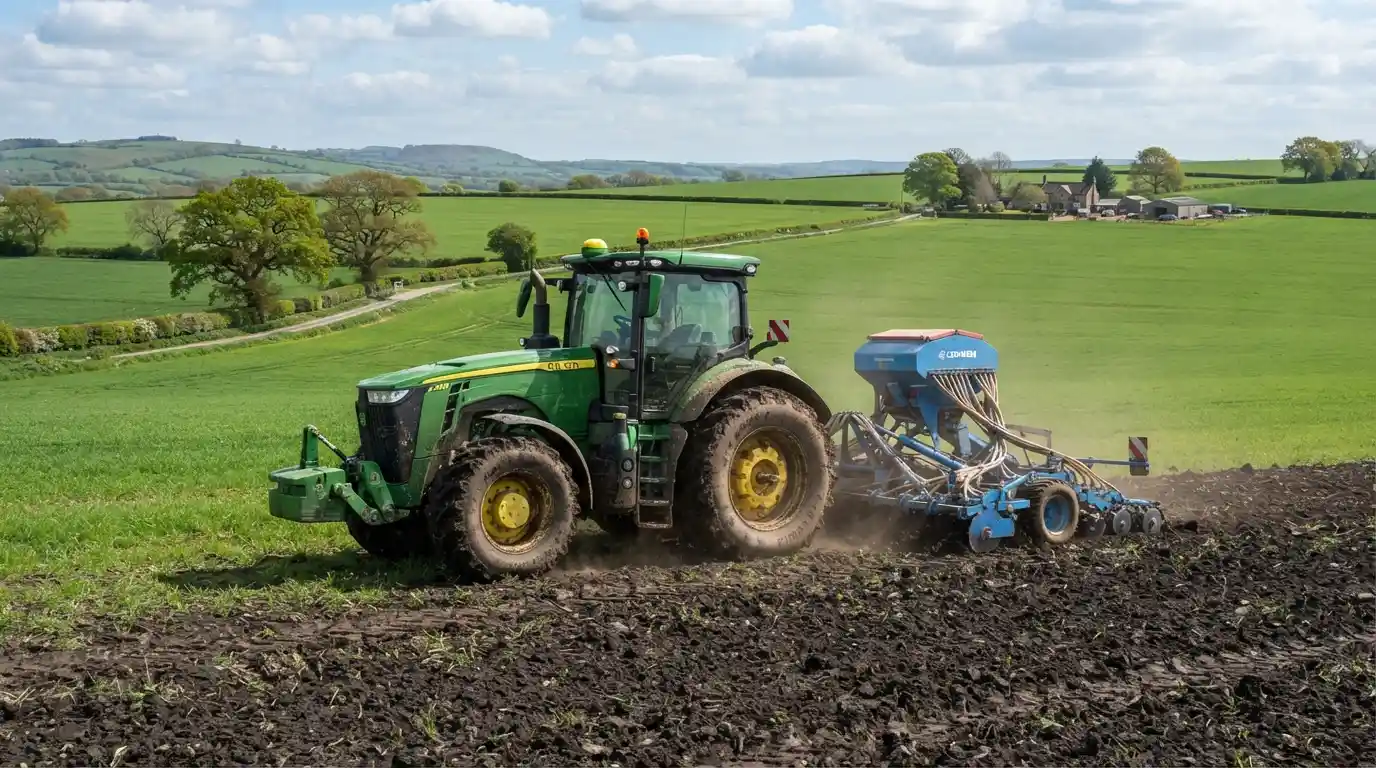
Imagine a farmer preparing a field before planting. Instead of repeating “tractor” in every sentence, different alternatives can make the description clearer.
Synonyms for tractor are useful for students, bloggers, writers, and daily English users who want to describe agricultural vehicles naturally.
Because synonyms for tractor can vary by context, learning them also helps you understand technical, professional, and informal English more accurately.
What Does “Tractor” Really Mean?
A tractor is a powerful motor vehicle designed mainly to pull, push, or operate equipment, especially in farming and other heavy-duty work.
The word is a noun.
In simple English, a tractor is a machine with an engine that provides power for pulling or operating other equipment. In agriculture, it commonly pulls implements such as plows, harrows, trailers, and cultivators.
Native speakers usually understand tractor as a large working vehicle associated with farming. However, the word can also refer to vehicles designed for towing heavy loads in industrial or transportation settings.
For example:
- The farmer used a tractor to prepare the field.
- The tractor pulled a heavy trailer.
- The worker drove a tractor across the farm.
The exact meaning depends on context. A farm tractor and a road tractor perform different jobs, even though both belong to the broader tractor category.
Category of “Tractor”
The word tractor belongs primarily to these vocabulary categories:
- Agriculture: farm machinery and field work
- Transportation: towing and hauling
- Engineering: powered mechanical vehicles
- Vehicles: specialized motor vehicles
- Heavy equipment: machines used for demanding work
Connotative Meaning
What is connotation? (Connotation is the feeling, association, or extra meaning that a word can suggest beyond its basic dictionary meaning.)
Positive Tone
“Tractor” can suggest productivity, hard work, farming, independence, and practical achievement.
For example, a tractor working across a field may create a positive image of a productive farming operation.
Negative Tone
The word itself is generally neutral. However, a tractor can have negative associations in contexts involving noise, pollution, difficult labor, or environmental concerns.
Neutral Tone
In most situations, tractor is a neutral technical and everyday word.
It describes a machine without automatically expressing approval or criticism.
Etymology of “Tractor”
The modern English noun tractor has an interesting history. It does not come from Old English as a native Old English word. Instead, its modern form entered English through Modern Latin.
Etymological evidence traces tractor to Modern Latin tractor, meaning “that which draws” or “that which pulls.” It ultimately comes from the Latin verb trahere, meaning “to pull” or “to draw.”
Old English: 450–1100
The modern word tractor was not an Old English word. Old English speakers used other vocabulary for ideas involving pulling, drawing, dragging, and moving objects.
Therefore, it would be inaccurate to claim that tractor itself existed in Old English with its modern meaning.
Middle English: 1100–1500
The modern agricultural meaning had still not developed. English continued to use words connected with pulling, dragging, drawing, carts, horses, and other forms of transportation and labor.
The Latin family behind tractor, however, eventually influenced several English words connected with drawing, pulling, and movement.
Modern English: 1500–Present
The noun tractor appeared in English in the nineteenth century. Etymological records date the general sense of “something that pulls” to 1856.
An earlier specialized use referred to a supposed medical device called a “metallic tractor.” The mechanical vehicle meaning developed later. By 1896, tractor was recorded for an engine or vehicle used to pull wagons or plows.
The transportation sense also developed later. By 1926, tractor could refer to a powerful truck used to pull a freight trailer.
Pronunciation
- US: /ˈtræk.tɚ/
- UK: /ˈtræk.tə/
Syllables
trac-tor
Affixation Pattern of “Tractor”
Root: tract- / trah- related to pulling or drawing
Prefix: None
Suffix: -or, an agent-forming element referring to something that performs an action
The underlying Latin connection is especially clear because trahere means “to pull” or “to draw.”
Synonyms List
Before looking at the list, there is an important vocabulary distinction.
There are not 40–50 perfect synonyms for tractor in standard English. Words such as farm tractor, tractor unit, and traction engine can function as contextual alternatives, but they do not always mean exactly the same thing.
The following list therefore combines direct alternatives, technical equivalents, descriptive alternatives, and established tractor-specific terms. This gives writers useful vocabulary without pretending that every term is interchangeable in every sentence.
1. Farm Tractor (Noun) — US /ˈfɑːrm ˌtræk.tɚ/ | UK /ˈfɑːm ˌtræk.tə/
Meaning: A tractor primarily designed for agricultural work.
Examples:
- The farmer drove the farm tractor into the field.
- The new farm tractor pulled the cultivator easily.
2. Agricultural Tractor (Noun) — US /ˌæɡ.rəˈkʌl.tʃɚ.əl ˈtræk.tɚ/ | UK /ˌæɡ.rɪˈkʌl.tʃər.əl ˈtræk.tə/
Meaning: A tractor designed specifically for farming and agricultural operations.
Examples:
- The agricultural tractor prepared the soil.
- Modern agricultural tractors can operate many implements.
3. Farm Vehicle (Noun) — US /ˈfɑːrm ˌviː.ə.kəl/ | UK /ˈfɑːm ˌviː.ə.kəl/
Meaning: A vehicle used for work on a farm, including tractors.
Examples:
- The farm vehicle crossed the muddy field.
- Farmers use different farm vehicles throughout the year.
4. Agricultural Vehicle (Noun) — US /ˌæɡ.rəˈkʌl.tʃɚ.əl ˈviː.ə.kəl/ | UK /ˌæɡ.rɪˈkʌl.tʃər.əl ˈviː.ə.kəl/
Meaning: A vehicle designed or adapted for agricultural work.
Examples:
- The agricultural vehicle carried equipment between fields.
- Regulations may apply differently to an agricultural vehicle.
5. Farm Machine (Noun) — US /ˈfɑːrm məˌʃiːn/ | UK /ˈfɑːm məˌʃiːn/
Meaning: A machine used to perform agricultural tasks.
Examples:
- The farm machine helped prepare the soil.
- Every farm machine needs proper maintenance.
6. Agricultural Machine (Noun) — US /ˌæɡ.rəˈkʌl.tʃɚ.əl məˌʃiːn/ | UK /ˌæɡ.rɪˈkʌl.tʃər.əl məˌʃiːn/
Meaning: A machine used to perform work in agriculture.
Examples:
- The agricultural machine moved slowly through the field.
- Farmers select an agricultural machine according to the task.
7. Traction Engine (Noun) — US /ˈtræk.ʃən ˌen.dʒɪn/ | UK /ˈtræk.ʃən ˌen.dʒɪn/
Meaning: A powered vehicle historically designed to provide traction and pull heavy loads.
Examples:
- The museum displayed an old traction engine.
- Early traction engines helped mechanize heavy agricultural work.
The term is historically connected with the development of tractors. Etymological records date traction engine to 1855.
8. Tractor Unit (Noun) — US /ˈtræk.tɚ ˌjuː.nɪt/ | UK /ˈtræk.tə ˌjuː.nɪt/
Meaning: The powered part of a road vehicle designed to pull a semi-trailer.
Examples:
- The tractor unit connected to the trailer.
- The company inspected the tractor unit before departure.
9. Road Tractor (Noun) — US /ˈroʊd ˌtræk.tɚ/ | UK /ˈrəʊd ˌtræk.tə/
Meaning: A road vehicle designed primarily to pull a trailer.
Examples:
- The road tractor pulled the freight trailer.
- The driver checked the road tractor before leaving.
10. Truck Tractor (Noun) — US /ˈtrʌk ˌtræk.tɚ/ | UK /ˈtrʌk ˌtræk.tə/
Meaning: A truck designed to pull a semitrailer rather than carry a load directly.
Examples:
- The truck tractor arrived at the depot.
- The company operates several truck tractors.
11. Prime Mover (Noun) — US /ˌpraɪm ˈmuː.vɚ/ | UK /ˌpraɪm ˈmuː.və/
Meaning: A machine that provides the main mechanical power for moving or driving another system.
Examples:
- The tractor acts as the prime mover for the implement.
- Engineers studied the prime mover before testing the system.
12. Tow Tractor (Noun) — US /ˈtoʊ ˌtræk.tɚ/ | UK /ˈtəʊ ˌtræk.tə/
Meaning: A powered vehicle designed to tow other vehicles or loads.
Examples:
- The tow tractor moved the equipment across the yard.
- Workers used a tow tractor to reposition the trailer.
13. Towing Tractor (Noun) — US /ˈtoʊ.ɪŋ ˌtræk.tɚ/ | UK /ˈtəʊ.ɪŋ ˌtræk.tə/
Meaning: A tractor used mainly for pulling or towing loads.
Examples:
- The towing tractor moved the heavy cart.
- The airport uses specialized towing tractors.
14. Yard Tractor (Noun) — US /ˈjɑːrd ˌtræk.tɚ/ | UK /ˈjɑːd ˌtræk.tə/
Meaning: A tractor used to move trailers or equipment around a yard or terminal.
Examples:
- The yard tractor moved a trailer into position.
- Workers guided the yard tractor through the loading area.
15. Terminal Tractor (Noun) — US /ˈtɝː.mə.nəl ˌtræk.tɚ/ | UK /ˈtɜː.mɪ.nəl ˌtræk.tə/
Meaning: A specialized tractor used for moving trailers within terminals or industrial facilities.
Examples:
- The terminal tractor moved containers around the facility.
- The operator parked the terminal tractor after the shift.
16. Industrial Tractor (Noun) — US /ɪnˈdʌs.tri.əl ˌtræk.tɚ/ | UK /ɪnˈdʌs.tri.əl ˌtræk.tə/
Meaning: A tractor designed for industrial rather than primarily agricultural work.
Examples:
- The industrial tractor moved heavy equipment.
- The factory uses an industrial tractor for towing.
17. Utility Tractor (Noun) — US /juːˈtɪl.ə.t̬i ˌtræk.tɚ/ | UK /juːˈtɪl.ə.ti ˌtræk.tə/
Meaning: A versatile tractor designed to perform several general-purpose tasks.
Examples:
- The utility tractor handled several jobs around the farm.
- A utility tractor can work with different implements.
18. Compact Tractor (Noun) — US /kəmˈpækt ˌtræk.tɚ/ | UK /kəmˈpækt ˌtræk.tə/
Meaning: A smaller tractor designed for lighter agricultural, landscaping, or property work.
Examples:
- The gardener used a compact tractor on the large property.
- A compact tractor can work in tighter spaces.
19. Garden Tractor (Noun) — US /ˈɡɑːr.dən ˌtræk.tɚ/ | UK /ˈɡɑː.dən ˌtræk.tə/
Meaning: A small tractor designed for gardening, grounds work, or similar tasks.
Examples:
- He used a garden tractor to move materials.
- The garden tractor worked well around the property.
20. Lawn Tractor (Noun) — US /ˈlɔːn ˌtræk.tɚ/ | UK /ˈlɔːn ˌtræk.tə/
Meaning: A small riding machine designed mainly for lawn maintenance.
Examples:
- The lawn tractor cut the grass quickly.
- She stored the lawn tractor in the shed.
21. Crawler Tractor (Noun) — US /ˈkrɔː.lɚ ˌtræk.tɚ/ | UK /ˈkrɔː.lə ˌtræk.tə/
Meaning: A tractor that moves on continuous tracks instead of conventional wheels.
Examples:
- The crawler tractor worked effectively on uneven ground.
- The operator drove the crawler tractor across the construction site.
22. Track-Type Tractor (Noun) — US /ˈtræk taɪp ˌtræk.tɚ/ | UK /ˈtræk taɪp ˌtræk.tə/
Meaning: A tractor that uses tracks to distribute its weight and provide traction.
Examples:
- The track-type tractor handled the rough terrain.
- Workers inspected the tracks on the track-type tractor.
23. Tracked Tractor (Noun) — US /ˈtrækt ˌtræk.tɚ/ | UK /ˈtrækt ˌtræk.tə/
Meaning: A tractor that travels on continuous tracks rather than ordinary wheels.
Examples:
- The tracked tractor crossed the soft ground.
- A tracked tractor can provide strong traction.
24. Wheel Tractor (Noun) — US /ˈwiːl ˌtræk.tɚ/ | UK /ˈwiːl ˌtræk.tə/
Meaning: A tractor that uses wheels for movement.
Examples:
- The farmer chose a wheel tractor for field work.
- The wheel tractor moved easily along the road.
25. Four-Wheel Tractor (Noun) — US /ˌfɔːr wiːl ˈtræk.tɚ/ | UK /ˌfɔː wiːl ˈtræk.tə/
Meaning: A tractor that uses four wheels as its primary running gear.
Examples:
- The four-wheel tractor worked across the field.
- The farm relies on a four-wheel tractor for several tasks.
26. Two-Wheel Tractor (Noun) — US /ˌtuː wiːl ˈtræk.tɚ/ | UK /ˌtuː wiːl ˈtræk.tə/
Meaning: A small tractor designed around two powered wheels and commonly operated from behind.
Examples:
- The farmer used a two-wheel tractor in the vegetable plot.
- A two-wheel tractor can work in narrow spaces.
27. Walking Tractor (Noun) — US /ˈwɔː.kɪŋ ˌtræk.tɚ/ | UK /ˈwɔː.kɪŋ ˌtræk.tə/
Meaning: A small tractor that an operator normally guides while walking behind it.
Examples:
- The farmer guided the walking tractor between the rows.
- A walking tractor suits some small-scale farms.
28. Hand Tractor (Noun) — US /ˈhænd ˌtræk.tɚ/ | UK /ˈhænd ˌtræk.tə/
Meaning: A small manually guided tractor designed for light agricultural work.
Examples:
- The grower used a hand tractor in the small field.
- The hand tractor moved easily between narrow rows.
29. Row-Crop Tractor (Noun) — US /ˈroʊ krɑːp ˌtræk.tɚ/ | UK /ˈrəʊ krɒp ˌtræk.tə/
Meaning: A tractor designed to work efficiently between rows of crops.
Examples:
- The row-crop tractor moved between the planted rows.
- The farmer selected a row-crop tractor for cultivation.
30. Orchard Tractor (Noun) — US /ˈɔːr.tʃɚd ˌtræk.tɚ/ | UK /ˈɔː.tʃəd ˌtræk.tə/
Meaning: A tractor designed for work in orchards and similar environments.
Examples:
- The orchard tractor moved between the trees.
- The farmer used an orchard tractor during harvest preparation.
31. Vineyard Tractor (Noun) — US /ˈvɪn.jɚd ˌtræk.tɚ/ | UK /ˈvɪn.jəd ˌtræk.tə/
Meaning: A specialized tractor designed for work among vineyard rows.
Examples:
- The vineyard tractor moved carefully between the vines.
- The grower used a vineyard tractor for routine field work.
32. Articulated Tractor (Noun) — US /ɑːrˈtɪk.jə.leɪ.t̬ɪd ˌtræk.tɚ/ | UK /ɑːˈtɪk.jə.leɪ.tɪd ˌtræk.tə/
Meaning: A tractor with a jointed frame that allows sections of the machine to pivot.
Examples:
- The articulated tractor turned smoothly on the worksite.
- The operator used the articulated tractor for heavy work.
33. Four-Wheel-Drive Tractor (Noun) — US /ˌfɔːr wiːl draɪv ˈtræk.tɚ/ | UK /ˌfɔː wiːl draɪv ˈtræk.tə/
Meaning: A tractor that delivers engine power to all four wheels.
Examples:
- The four-wheel-drive tractor handled the steep field.
- The farmer used a four-wheel-drive tractor in difficult conditions.
34. Front-Wheel-Assist Tractor (Noun) — US /ˌfrʌnt wiːl əˈsɪst ˌtræk.tɚ/ | UK /ˌfrʌnt wiːl əˈsɪst ˌtræk.tə/
Meaning: A tractor whose front wheels can also receive engine power to improve traction.
Examples:
- The front-wheel-assist tractor maintained traction on wet soil.
- The farmer selected a front-wheel-assist tractor for field work.
35. Rubber-Tired Tractor (Noun) — US /ˈrʌb.ɚ taɪɚd ˌtræk.tɚ/ | UK /ˈrʌb.ə taɪəd ˌtræk.tə/
Meaning: A tractor that uses rubber tires rather than continuous tracks.
Examples:
- The rubber-tired tractor traveled easily between fields.
- The road surface suited the rubber-tired tractor.
36. Diesel Tractor (Noun) — US /ˈdiː.zəl ˌtræk.tɚ/ | UK /ˈdiː.zəl ˌtræk.tə/
Meaning: A tractor powered by a diesel engine.
Examples:
- The farm operates a diesel tractor.
- The diesel tractor pulled the heavy implement.
37. Electric Tractor (Noun) — US /ɪˈlek.trɪk ˌtræk.tɚ/ | UK /ɪˈlek.trɪk ˌtræk.tə/
Meaning: A tractor powered by an electric drive system rather than a conventional combustion engine.
Examples:
- The electric tractor operated quietly during the demonstration.
- The farm tested an electric tractor for routine work.
38. Autonomous Tractor (Noun) — US /ɔːˈtɑː.nə.məs ˌtræk.tɚ/ | UK /ɔːˈtɒn.ə.məs ˌtræk.tə/
Meaning: A tractor capable of performing certain operations with limited or no direct human driving.
Examples:
- The autonomous tractor followed a programmed route.
- Engineers tested the autonomous tractor in the field.
39. Driverless Tractor (Noun) — US /ˈdraɪ.vɚ.ləs ˌtræk.tɚ/ | UK /ˈdraɪ.və.ləs ˌtræk.tə/
Meaning: A tractor designed to operate without a person continuously driving it.
Examples:
- The driverless tractor completed the planned route.
- Researchers demonstrated a driverless tractor on the farm.
40. Steam Tractor (Noun) — US /ˈstiːm ˌtræk.tɚ/ | UK /ˈstiːm ˌtræk.tə/
Meaning: An early tractor powered by steam rather than a modern internal-combustion engine.
Examples:
- The museum displayed a restored steam tractor.
- Visitors watched the historic steam tractor operate.
41. Motor Tractor (Noun) — US /ˈmoʊ.tɚ ˌtræk.tɚ/ | UK /ˈməʊ.tə ˌtræk.tə/
Meaning: A tractor powered by a motor, especially in historical or descriptive usage.
Examples:
- The article described an early motor tractor.
- The museum preserves several historic motor tractors.
42. Pulling Machine (Noun) — US /ˈpʊl.ɪŋ məˌʃiːn/ | UK /ˈpʊl.ɪŋ məˌʃiːn/
Meaning: A general descriptive term for a machine whose main function involves pulling loads.
Examples:
- The tractor served as a powerful pulling machine.
- The old pulling machine moved the equipment slowly.
43. Towing Machine (Noun) — US /ˈtoʊ.ɪŋ məˌʃiːn/ | UK /ˈtəʊ.ɪŋ məˌʃiːn/
Meaning: A machine designed to move another object by pulling it.
Examples:
- The tractor acted as a towing machine.
- The towing machine moved the loaded trailer.
44. Power Unit (Noun) — US /ˈpaʊ.ɚ ˌjuː.nɪt/ | UK /ˈpaʊ.ə ˌjuː.nɪt/
Meaning: A machine or component that supplies mechanical power to another system.
Examples:
- The tractor provides the power unit for the implement.
- The engineer inspected the power unit before operation.
45. Pulling Vehicle (Noun) — US /ˈpʊl.ɪŋ ˌviː.ə.kəl/ | UK /ˈpʊl.ɪŋ ˌviː.ə.kəl/
Meaning: A descriptive term for a vehicle primarily used to pull another load or machine.
Examples:
- The tractor is a specialized pulling vehicle.
- The pulling vehicle moved the trailer across the yard.
Synonyms for Tractor by Tone
Because tractor is primarily a technical noun, its alternatives do not usually have strong emotional tones. Instead, tone often comes from the context and the choice between technical and descriptive language.
Positive
Words such as farm tractor, utility tractor, and agricultural tractor can sound practical and productive when discussing farming.
For example, “The utility tractor helped the farmer complete several tasks” has a practical and positive feel.
Neutral
Tractor, farm vehicle, agricultural vehicle, tractor unit, and power unit are generally neutral.
They work well in factual writing.
Negative
The vocabulary itself is usually neutral. Negative meaning normally comes from the surrounding sentence.
For example, “The noisy tractor disturbed the neighborhood” creates a negative impression through the adjective noisy, not through the noun tractor.
Playful or Informal
Informal descriptions such as big farm machine may sound more conversational, but they are not exact synonyms.
This distinction matters because natural English depends on context, not simply on replacing one word with another.
“Tractor” vs Close Alternatives
Tractor vs Farm Tractor
The term Tractor is broader. It can refer to agricultural tractors as well as specialized road or industrial tractors.
Farm tractor specifically points toward agricultural use.
Use tractor when the context is already clear. Use farm tractor when you want to emphasize agriculture.
Tractor vs Agricultural Vehicle
Tractor identifies a particular type of powered machine.
Agricultural vehicle is broader and can include several types of vehicles used in farming.
Therefore, you should not automatically replace tractor with agricultural vehicle.
Tractor vs Traction Engine
A tractor is the modern general term for the machine.
A traction engine is strongly associated with earlier heavy steam-powered machinery and historical agricultural use. Etymological records connect the development of the modern tractor sense with earlier traction engines.
How “Tractor” Changes by Context
Daily Conversation
In everyday conversation, tractor is usually the clearest word.
If someone says, “The tractor is in the field,” listeners can usually understand the meaning immediately.
You can use farm tractor when you want to make the agricultural context explicit.
Writing or Blogging
Bloggers can use related terms to avoid unnecessary repetition.
For example, an article about farming could naturally alternate between tractor, farm tractor, agricultural machine, and a specific type such as row-crop tractor.
However, do not replace tractor simply to create keyword variation. The alternative must fit the meaning.
Professional or Academic Tone
Technical writing often benefits from precise terms.
A report may need agricultural tractor, tractor unit, crawler tractor, or articulated tractor rather than a vague phrase such as “farm machine.”
Precision matters more than variety in professional writing.
Creative or Informal Use
Creative writing can use descriptive expressions such as powerful pulling machine or working vehicle.
These descriptions can create an image for the reader, but they do not always function as dictionary synonyms.
Common Mistakes & Native Usage
Mistake 1: Treating Every Related Word as a Perfect Synonym
A tractor unit is not the same as an agricultural tractor.
It normally refers to the powered vehicle used to pull a semitrailer.
Mistake 2: Calling Every Farm Machine a Tractor
A combine harvester, baler, cultivator, and tractor are different types of agricultural equipment.
The broader phrase farm machine can include all of them.
Mistake 3: Using “Traction Engine” for Every Modern Tractor
A traction engine has a more specific historical meaning.
Use it when the context involves the appropriate type of machinery, especially historical steam-powered equipment.
Mistake 4: Overusing Synonyms
Good writing does not require a different word in every sentence.
Repeating tractor is completely natural when it remains the clearest word.
Register Notes
Tractor is neutral and widely understood.
Technical alternatives such as tractor unit, prime mover, and front-wheel-assist tractor are more specialized.
Descriptive terms such as pulling machine are less precise and work better when explaining the basic function to beginners.
Real-Life Examples Using “Tractor”
Workplace
A farm manager tells a worker to move the tractor to another field before starting cultivation.
Social Situation
A child visiting a farm points toward a large tractor and asks how the machine can pull such heavy equipment.
Media and Documentaries
A farming documentary may describe how tractors changed agricultural production and reduced dependence on animal power.
Writing and Storytelling
A writer might describe a tractor moving slowly through a dusty field to establish a rural setting.
Why Context Matters When Choosing a Tractor Synonym
Choosing a synonym is not simply about finding another word that looks similar in a dictionary.
Consider these two sentences:
“The tractor pulled the trailer.”
“The lawn tractor pulled the trailer.”
The second sentence gives a much more specific image. However, it could also be inaccurate if the machine was not actually a lawn tractor.
This is why vocabulary learners should focus on meaning, context, register, and precision.
For SEO writers, the same principle applies. Semantic variety is useful when it improves clarity, but forced synonyms can make content sound unnatural.
Exercise: Test Your Understanding
Choose the option that best fits each situation.
1. A farmer is preparing a large field for planting. Which term is most natural?
A. Tractor
B. Movie trailer
C. Passenger car
D. Bicycle
2. A vehicle pulls a semitrailer on a highway. Which term is most precise?
A. Lawn tractor
B. Tractor unit
C. Garden tractor
D. Walking tractor
3. A machine moves around a shipping terminal and repositions trailers. Which term fits best?
A. Terminal tractor
B. Orchard tractor
C. Steam tractor
D. Lawn tractor
4. A small machine is designed to work between garden rows. Which term may fit?
A. Walking tractor
B. Road tractor
C. Truck tractor
D. Tractor unit
5. A historical museum displays an old steam-powered agricultural machine. Which term is appropriate?
A. Electric tractor
B. Steam tractor
C. Autonomous tractor
D. Terminal tractor
6. Which term is broader than “tractor”?
A. Agricultural vehicle
B. Row-crop tractor
C. Crawler tractor
D. Vineyard tractor
7. Which term specifically describes a tractor designed to work among vineyard rows?
A. Vineyard tractor
B. Road tractor
C. Yard tractor
D. Truck tractor
8. Which term describes a tractor that uses continuous tracks?
A. Crawler tractor
B. Wheel tractor
C. Lawn tractor
D. Road tractor
9. Which expression is usually more technical?
A. Big farm machine
B. Tractor unit
C. Working vehicle
D. Pulling machine
10. Which sentence uses “farm tractor” naturally?
A. The farmer drove the farm tractor into the field.
B. She drank a farm tractor.
C. The farm tractor answered the telephone.
D. He mailed the farm tractor.
11. Which term refers to a tractor powered by electricity?
A. Electric tractor
B. Steam tractor
C. Diesel tractor
D. Traction engine
12. Which term describes a tractor designed to work between crop rows?
A. Row-crop tractor
B. Terminal tractor
C. Truck tractor
D. Yard tractor
13. Which term is most closely associated with historical steam machinery?
A. Traction engine
B. Electric tractor
C. Autonomous tractor
D. Compact tractor
14. Which word is normally the safest general term?
A. Tractor
B. Vineyard tractor
C. Terminal tractor
D. Orchard tractor
15. Why should writers avoid forcing every alternative into every sentence?
A. Synonyms always have opposite meanings.
B. Context determines whether an alternative is accurate.
C. Tractors cannot have different names.
D. Technical vocabulary is never useful.
Reflection Task
Think About Your Own Vocabulary
Write three sentences about farming, transportation, or heavy machinery.
Use tractor in the first sentence, a more specific term in the second, and a descriptive alternative in the third. Then ask yourself whether each word keeps the original meaning clear.
Answer Key: 1-A | 2-B | 3-A | 4-A | 5-B | 6-A | 7-A | 8-A | 9-B | 10-A | 11-A | 12-A | 13-A | 14-A | 15-B
Conclusion
Learning synonyms for tractor is really about understanding precision. A general word may work well, while a technical alternative can make your meaning sharper.
Words such as farm tractor, tractor unit, and crawler tractor help readers understand exactly what type of machine you mean.
For students and English learners, these alternatives expand vocabulary. For bloggers and writers, they also make explanations more natural and informative.
Try using these words in emails, essays, articles, and daily conversations. A few minutes of practice can make your English clearer and more flexible.

Evelyn Hartwell is an English vocabulary writer who focuses on clear, practical language for learners and everyday readers. Her writing explores synonyms, word meanings, pronunciation, tone, and natural usage. She believes that learning vocabulary should be simple, useful, and enjoyable. Her articles are designed to help students, bloggers, and English learners choose the right words with greater confidence.