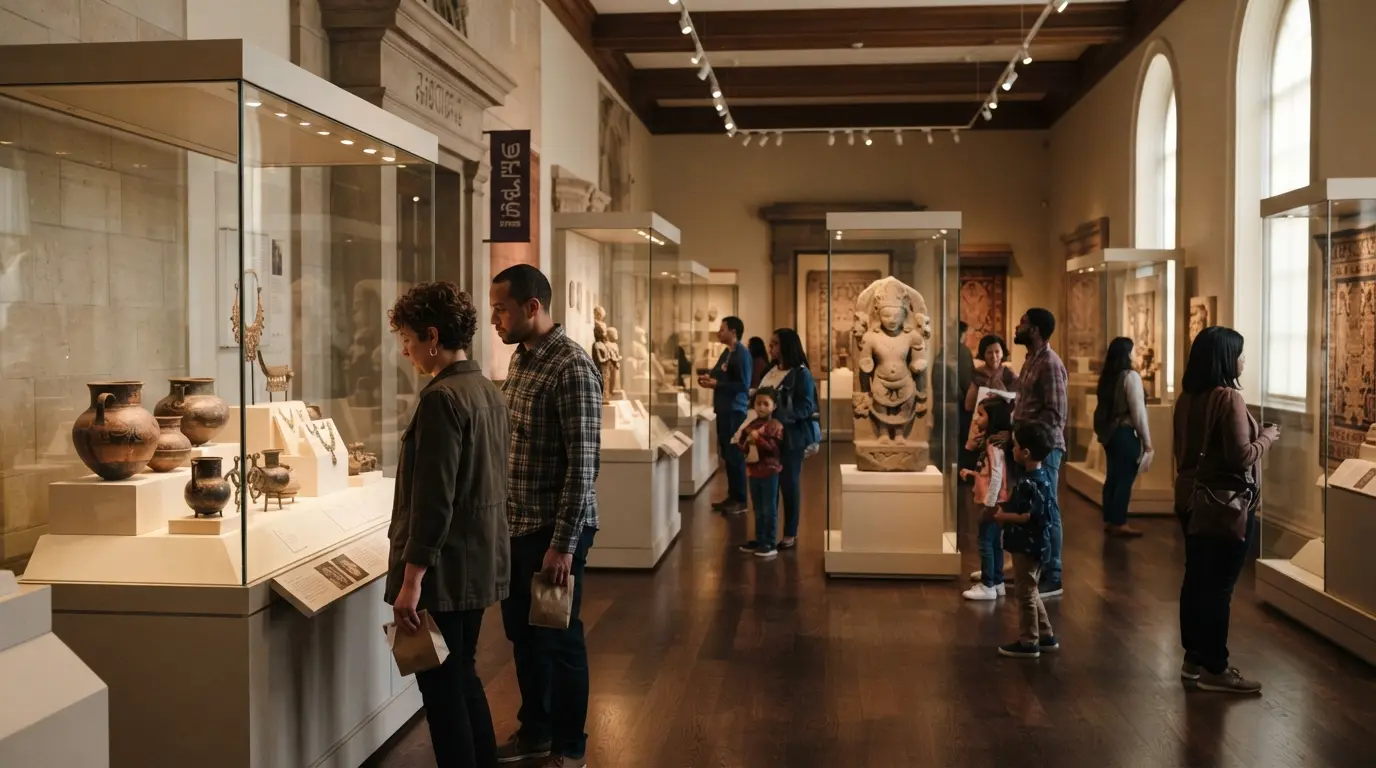
Synonyms for exhibition can help you describe an art event, public display, museum collection, or school presentation without repeating the same word.
Imagine entering a gallery filled with paintings and photographs. You might call the event an exhibition, show, display, or showcase.
Learning synonyms for exhibition gives you more precise choices. Each alternative can highlight the event, the objects, the audience, or the purpose.
For students, bloggers, content writers, and everyday English users, synonyms for exhibition make writing and speaking more varied, natural, and accurate.
What Does “Exhibition” Really Mean?
Exhibition is a noun that usually means an organized public display of art, objects, information, products, or other material.
In simple English, an exhibition is an organized event or display where something is shown to people.
For example:
- The museum opened a new art exhibition.
- We visited an exhibition of historical photographs.
- The school organized a science exhibition.
The word can refer to the event itself, the organized display, or the act of showing something, depending on context.
Common Contexts for “Exhibition”
You will commonly see exhibition used in:
- museums
- art galleries
- photography
- schools
- universities
- science events
- cultural programs
- historical displays
- trade events
- technology events
- public demonstrations
For example, an art museum may hold an exhibition of paintings, while a university may organize an exhibition of student projects.
Part of Speech
Exhibition is a noun.
Its plural form is exhibitions.
Common expressions include:
- art exhibition
- museum exhibition
- photography exhibition
- science exhibition
- temporary exhibition
- permanent exhibition
- public exhibition
- exhibition hall
- exhibition opening
- exhibition space
There is also a less common meaning related to the act of showing a quality or behavior.
For example:
“His exhibition of courage impressed the audience.”
Here, exhibition means a visible demonstration or display of a particular quality.
Connotative Meaning
Connotation (the feeling or idea a word suggests beyond its basic dictionary meaning) can change depending on how exhibition is used.
Positive Tone
In museums, galleries, and educational settings, exhibition often suggests creativity, discovery, culture, learning, and public engagement.
For example:
“The new exhibition gives visitors a fascinating look at ancient history.”
Neutral Tone
The word is usually neutral when it simply describes an organized display.
For example:
“The museum opened an exhibition of local photographs.”
There is no strong positive or negative judgment in this sentence.
Negative Tone
The word itself is not normally negative. However, its meaning can become negative when it refers to an unwanted display of behavior or emotion.
For example:
“His exhibition of anger made the room uncomfortable.”
The surrounding context creates the negative impression.
Etymology of “Exhibition”
The word exhibition has roots in Latin and is connected with the idea of showing, presenting, or bringing something forward.
It comes from Latin exhibitio, meaning a showing or presentation, from exhibere, meaning “to hold out” or “present.” The word later entered English through French and developed several related meanings.
Old English: 450–1100
The modern word exhibition was not part of standard Old English vocabulary.
Old English had other native words and expressions for showing, revealing, presenting, and displaying things.
Middle English: 1100–1500
The word entered English during the Middle English period through French and Latin influence.
Its earlier meanings were associated with presenting, supplying, or showing something.
Modern English: 1500–Present
Over time, exhibition developed the familiar sense of a public display.
Today, the word is strongly associated with museums, galleries, cultural events, educational displays, art shows, and professional exhibitions.
Pronunciation of “Exhibition”
- US: /ˌek.səˈbɪʃ.ən/
- UK: /ˌek.sɪˈbɪʃ.ən/
Syllables
ex-hi-bi-tion
Affixation Pattern
Root: related to Latin hibere, associated with holding or presenting
Prefix: ex-, meaning “out”
Suffix: -ion, forming a noun associated with an action or process
Historically, the word carries the idea of bringing something out or presenting it for others to see.
Synonyms for Exhibition
Not every word connected with an exhibition is a perfect replacement.
For example, display can refer to the arrangement of objects, while show can refer to the event itself. Exhibit can refer to an individual item, and gallery normally refers to a place.
The following alternatives are grouped according to how closely they can replace exhibition in natural English.
1. Display
US: /dɪˈspleɪ/
UK: /dɪˈspleɪ/
Meaning: A collection or arrangement of things that are placed where people can see them.
Examples:
- The museum created a display of ancient coins.
- The library has a display of local artwork.
Usage: Display is one of the closest alternatives to exhibition, especially when the focus is on the objects being shown.
2. Show
US: /ʃoʊ/
UK: /ʃəʊ/
Meaning: An event where something is presented or displayed for an audience.
Examples:
- We went to an art show on Saturday.
- Her photographs were featured in a local show.
Usage: Show is more conversational than exhibition and is very common in everyday English.
3. Showcase
US: /ˈʃoʊ.keɪs/
UK: /ˈʃəʊ.keɪs/
Meaning: An event or display designed to highlight something impressive or important.
Examples:
- The festival is a showcase for young artists.
- The university held a showcase of student projects.
Usage: Showcase emphasizes the purpose of highlighting talent, quality, or achievement.
4. Exposition
US: /ˌek.spəˈzɪʃ.ən/
UK: /ˌek.spəˈzɪʃ.ən/
Meaning: A large or formal public exhibition, often related to a particular subject or industry.
Examples:
- The city hosted an international exposition.
- Visitors attended the technology exposition.
Usage: Exposition is more formal and is often associated with large-scale events.
5. Expo
US: /ˈek.spoʊ/
UK: /ˈek.spəʊ/
Meaning: A large exhibition where organizations, industries, or groups present products, ideas, or developments.
Examples:
- Thousands of people attended the technology expo.
- She presented her research at the education expo.
Usage: Expo is a shortened and widely used form related to exposition.
6. Exhibit
US: /ɪɡˈzɪb.ɪt/
UK: /ɪɡˈzɪb.ɪt/
Meaning: An object or collection presented for people to see, or an organized display in a particular context.
Examples:
- The dinosaur exhibit attracted many children.
- Each exhibit explains part of the museum’s history.
Usage: Exhibit is closely related to exhibition, but an exhibit often refers to an individual displayed item or a particular section of a larger exhibition.
7. Presentation
US: /ˌprez.ənˈteɪ.ʃən/
UK: /ˌprez.ənˈteɪ.ʃən/
Meaning: An organized act of showing, explaining, or introducing something to an audience.
Examples:
- The students prepared a presentation of their research.
- Her presentation included photographs and maps.
Usage: Presentation is broader than exhibition and is especially useful when information is being explained.
8. Demonstration
US: /ˌdem.ənˈstreɪ.ʃən/
UK: /ˌdem.ənˈstreɪ.ʃən/
Meaning: An act of showing how something works or is done.
Examples:
- The museum included a demonstration of traditional pottery.
- We watched a cooking demonstration.
Usage: Demonstration is best when the main purpose is to show a process or activity.
9. Fair
US: /fer/
UK: /feə/
Meaning: A public event where people display, promote, or exchange things related to a particular subject.
Examples:
- The school held a science fair.
- We visited the annual book fair.
Usage: Fair can overlap with exhibition when displays are part of a larger public event.
10. Art Show
US: /ɑːrt ʃoʊ/
UK: /ɑːt ʃəʊ/
Meaning: An event where works of art are displayed for visitors.
Examples:
- Her paintings appeared in a local art show.
- We visited an art show downtown.
Usage: Art show is a natural, everyday alternative to art exhibition.
11. Art Display
US: /ɑːrt dɪˈspleɪ/
UK: /ɑːt dɪˈspleɪ/
Meaning: An arrangement of artworks created for people to view.
Examples:
- The school prepared an art display.
- The library has an art display near the entrance.
Usage: Art display focuses more on the displayed works than on the event.
12. Trade Show
US: /ˈtreɪd ʃoʊ/
UK: /ˈtreɪd ʃəʊ/
Meaning: A professional event where businesses display products, services, or ideas for a particular industry.
Examples:
- The company attended a major trade show.
- She met several designers at the trade show.
Usage: Trade show is a specialized type of exhibition rather than a universal synonym.
13. Trade Fair
US: /ˈtreɪd fer/
UK: /ˈtreɪd feə/
Meaning: An organized event where businesses or organizations present products and services.
Examples:
- The annual trade fair attracted international visitors.
- Several manufacturers participated in the trade fair.
Usage: Trade fair is especially common in business and industry contexts.
14. Installation
US: /ˌɪn.stəˈleɪ.ʃən/
UK: /ˌɪn.stəˈleɪ.ʃən/
Meaning: A specially arranged artwork or group of objects designed for a particular space.
Examples:
- The museum unveiled a new art installation.
- Visitors walked through an interactive installation.
Usage: Installation is common in contemporary art and should not replace exhibition when referring to the entire event.
15. Spectacle
US: /ˈspek.tə.kəl/
UK: /ˈspek.tə.kəl/
Meaning: A striking or impressive sight that attracts considerable attention.
Examples:
- The opening ceremony was a spectacular visual spectacle.
- The light show became the evening’s main spectacle.
Usage: Spectacle focuses on the visual impact rather than the organized exhibition itself.
16. Salon
US: /səˈlɑːn/
UK: /ˈsæl.ɒn/
Meaning: A traditional or organized gathering or exhibition of artistic work.
Examples:
- The painter submitted her work to the annual salon.
- The salon attracted several emerging artists.
Usage: Salon is often associated with art history and formal artistic exhibitions.
17. Showing
US: /ˈʃoʊ.ɪŋ/
UK: /ˈʃəʊ.ɪŋ/
Meaning: An occasion when something is presented or made available for people to see.
Examples:
- The gallery held a private showing of the paintings.
- The artist invited guests to the first showing.
Usage: Showing is particularly natural for films, artwork, performances, and special presentations.
18. Display Event
US: /dɪˈspleɪ ɪˌvent/
UK: /dɪˈspleɪ ɪˌvent/
Meaning: An organized event created to present objects, work, or information to an audience.
Examples:
- The school organized a display event for parents.
- The display event featured student inventions.
Usage: This is a descriptive phrase rather than a fixed dictionary synonym.
19. Public Display
US: /ˌpʌb.lɪk dɪˈspleɪ/
UK: /ˌpʌb.lɪk dɪˈspleɪ/
Meaning: Something deliberately presented for members of the public to see.
Examples:
- The sculpture is on public display.
- The documents were placed on public display.
Usage: Public display works especially well when access by the general public is important.
20. Public Showing
US: /ˌpʌb.lɪk ˈʃoʊ.ɪŋ/
UK: /ˌpʌb.lɪk ˈʃəʊ.ɪŋ/
Meaning: A public occasion when something is presented or shown.
Examples:
- The museum announced a public showing of the collection.
- The public showing attracted many visitors.
Usage: It can describe films, art, collections, or other presentations.
21. Art Presentation
US: /ɑːrt ˌprez.ənˈteɪ.ʃən/
UK: /ɑːt ˌprez.ənˈteɪ.ʃən/
Meaning: An organized presentation of artwork to an audience.
Examples:
- The artist gave an art presentation.
- The students prepared an art presentation for visitors.
Usage: This phrase focuses on presenting or explaining art rather than simply displaying it.
22. Cultural Display
US: /ˈkʌl.tʃər.əl dɪˈspleɪ/
UK: /ˈkʌl.tʃər.əl dɪˈspleɪ/
Meaning: A public display of objects, traditions, or information connected with a culture.
Examples:
- The festival included a cultural display.
- Visitors enjoyed the cultural display at the museum.
Usage: This is useful when the exhibition centers on cultural heritage.
23. Cultural Exhibition
US: /ˈkʌl.tʃər.əl ˌek.səˈbɪʃ.ən/
UK: /ˈkʌl.tʃər.əl ˌek.sɪˈbɪʃ.ən/
Meaning: An exhibition presenting aspects of a particular culture or community.
Examples:
- The cultural exhibition explored traditional clothing.
- We learned about local customs at the cultural exhibition.
Usage: This is a specific type of exhibition rather than a universal replacement.
24. Historical Display
US: /hɪˈstɔːr.ɪ.kəl dɪˈspleɪ/
UK: /hɪˈstɒr.ɪ.kəl dɪˈspleɪ/
Meaning: A public arrangement of historical objects or information.
Examples:
- The historical display includes letters from the period.
- Visitors studied the historical display carefully.
Usage: Historical display is useful for museums, archives, and heritage centers.
25. Museum Display
US: /mjuˈziː.əm dɪˈspleɪ/
UK: /mjuˈziː.əm dɪˈspleɪ/
Meaning: Objects, images, or information arranged for visitors inside a museum.
Examples:
- The museum display explains the history of the region.
- We studied the new museum display.
Usage: Museum display often describes one section within a larger museum exhibition.
26. Photography Show
US: /fəˈtɑː.ɡrə.fi ʃoʊ/
UK: /fəˈtɒɡ.rə.fi ʃəʊ/
Meaning: An event where photographs are presented to an audience.
Examples:
- Her photographs appeared in a photography show.
- The photography show opened yesterday.
Usage: This is a natural alternative to photography exhibition in informal English.
27. Photography Exhibition
US: /fəˈtɑː.ɡrə.fi ˌek.səˈbɪʃ.ən/
UK: /fəˈtɒɡ.rə.fi ˌek.sɪˈbɪʃ.ən/
Meaning: An exhibition devoted to photographs and photographic work.
Examples:
- The photography exhibition features black-and-white portraits.
- We visited a photography exhibition last weekend.
Usage: This is a specific type of exhibition and is useful for precise writing.
28. Science Exhibition
US: /ˈsaɪ.əns ˌek.səˈbɪʃ.ən/
UK: /ˈsaɪ.əns ˌek.sɪˈbɪʃ.ən/
Meaning: An exhibition where scientific projects, information, or discoveries are presented.
Examples:
- The students prepared a science exhibition.
- Visitors explored the science exhibition.
Usage: Common in educational settings.
29. Science Fair
US: /ˈsaɪ.əns fer/
UK: /ˈsaɪ.əns feə/
Meaning: An educational event where students present scientific projects or experiments.
Examples:
- My brother entered the science fair.
- The science fair featured creative experiments.
Usage: Science fair is closely related to a school exhibition but has a more specific educational meaning.
30. Product Exhibition
US: /ˈprɑː.dʌkt ˌek.səˈbɪʃ.ən/
UK: /ˈprɒd.ʌkt ˌek.sɪˈbɪʃ.ən/
Meaning: An event where products are presented for visitors to examine.
Examples:
- The product exhibition attracted industry professionals.
- Several companies participated in the product exhibition.
Usage: Common in business and industry contexts.
31. Product Showcase
US: /ˈprɑː.dʌkt ˈʃoʊ.keɪs/
UK: /ˈprɒd.ʌkt ˈʃəʊ.keɪs/
Meaning: An event or display designed to highlight products.
Examples:
- The company organized a product showcase.
- The product showcase introduced several new designs.
Usage: Showcase emphasizes highlighting the products.
32. Educational Display
US: /ˌedʒ.əˈkeɪ.ʃən.əl dɪˈspleɪ/
UK: /ˌedʒ.uˈkeɪ.ʃən.əl dɪˈspleɪ/
Meaning: A display designed to teach visitors about a particular subject.
Examples:
- The children enjoyed the educational display.
- The museum added an educational display about wildlife.
Usage: This term focuses on the learning purpose of the display.
33. Visual Display
US: /ˈvɪʒ.u.əl dɪˈspleɪ/
UK: /ˈvɪʒ.u.əl dɪˈspleɪ/
Meaning: An arrangement that communicates information or ideas through visible objects or images.
Examples:
- The entrance has a visual display of old photographs.
- The visual display explains the project’s history.
Usage: Visual display is broader than exhibition and can describe small or large arrangements.
34. Curated Display
US: /ˈkjʊr.eɪ.tɪd dɪˈspleɪ/
UK: /ˈkjʊə.reɪ.tɪd dɪˈspleɪ/
Meaning: A carefully selected and organized display built around a particular idea or theme.
Examples:
- The museum created a curated display of local artwork.
- Visitors enjoyed the carefully curated display.
Usage: Curated highlights the deliberate selection and organization of material.
35. Thematic Display
US: /θiːˈmæt̬.ɪk dɪˈspleɪ/
UK: /θiːˈmæt.ɪk dɪˈspleɪ/
Meaning: A display organized around a particular theme.
Examples:
- The museum created a thematic display about migration.
- The thematic display connects art with history.
Usage: This is useful when the organizing idea matters as much as the objects.
36. Special Display
US: /ˌspeʃ.əl dɪˈspleɪ/
UK: /ˌspeʃ.əl dɪˈspleɪ/
Meaning: A display created for a particular occasion, subject, or purpose.
Examples:
- The museum prepared a special display for the anniversary.
- The special display features rare photographs.
Usage: Special display is common in museums, libraries, schools, and shops.
37. Public Showcase
US: /ˌpʌb.lɪk ˈʃoʊ.keɪs/
UK: /ˌpʌb.lɪk ˈʃəʊ.keɪs/
Meaning: A public event or display designed to highlight particular work or achievements.
Examples:
- The event became a public showcase for young talent.
- The university held a public showcase.
Usage: Public showcase emphasizes both visibility and the purpose of highlighting something.
38. Art Installation
US: /ɑːrt ˌɪn.stəˈleɪ.ʃən/
UK: /ɑːt ˌɪn.stəˈleɪ.ʃən/
Meaning: A specially arranged artwork designed for a particular space.
Examples:
- The artist created an unusual art installation.
- The art installation filled the entire room.
Usage: An installation may be part of an exhibition rather than the exhibition itself.
39. Exhibition Event
US: /ˌek.səˈbɪʃ.ən ɪˌvent/
UK: /ˌek.sɪˈbɪʃ.ən ɪˌvent/
Meaning: An organized event centered around an exhibition or public display.
Examples:
- The exhibition event opened on Friday.
- Local artists attended the exhibition event.
Usage: This phrase is descriptive and is useful when emphasizing the occasion.
40. Open Exhibition
US: /ˌoʊ.pən ˌek.səˈbɪʃ.ən/
UK: /ˌəʊ.pən ˌek.sɪˈbɪʃ.ən/
Meaning: An exhibition that is open to the public or accepts work from a broad range of participants.
Examples:
- The gallery announced an open exhibition.
- Artists were invited to submit work for the open exhibition.
Usage: Open exhibition has a specific meaning and should not replace exhibition in every context.
41. Public Exhibition
US: /ˌpʌb.lɪk ˌek.səˈbɪʃ.ən/
UK: /ˌpʌb.lɪk ˌek.sɪˈbɪʃ.ən/
Meaning: An exhibition made available for members of the public to visit.
Examples:
- The historical documents were placed in a public exhibition.
- The museum announced a new public exhibition.
Usage: This phrase highlights public access.
42. Permanent Display
US: /ˌpɝː.mə.nənt dɪˈspleɪ/
UK: /ˌpɜː.mə.nənt dɪˈspleɪ/
Meaning: A display intended to remain available for a long period.
Examples:
- The sculpture is now part of the permanent display.
- The museum created a permanent display of local history.
Usage: Permanent display contrasts with a temporary exhibition.
43. Temporary Display
US: /ˌtem.pə.rer.i dɪˈspleɪ/
UK: /ˌtem.pər.ər.i dɪˈspleɪ/
Meaning: A display intended to remain for a limited period.
Examples:
- The museum opened a temporary display.
- The temporary display will remain until June.
Usage: This is useful when duration is important.
44. Art Showcase
US: /ɑːrt ˈʃoʊ.keɪs/
UK: /ɑːt ˈʃəʊ.keɪs/
Meaning: An event or display designed to highlight artwork or artists.
Examples:
- The university organized an art showcase.
- Her paintings were selected for the art showcase.
Usage: Art showcase emphasizes the opportunity to highlight creative work.
45. Exhibition Showcase
US: /ˌek.səˈbɪʃ.ən ˈʃoʊ.keɪs/
UK: /ˌek.sɪˈbɪʃ.ən ˈʃəʊ.keɪs/
Meaning: A presentation designed to highlight selected items or achievements within an exhibition setting.
Examples:
- The event included an exhibition showcase for young artists.
- The exhibition showcase attracted many visitors.
Usage: This is a descriptive phrase rather than a universal replacement for exhibition.
Synonyms for Exhibition by Tone
The best word depends on the impression you want to create.
Positive or Engaging
These words can make an event sound interesting, creative, or achievement-focused:
- showcase
- art showcase
- public showcase
- presentation
- festival
- spectacle
Showcase is especially useful when the purpose is to highlight talent or quality.
Neutral
These options are useful for straightforward descriptions:
- exhibition
- display
- show
- exhibit
- presentation
- collection
- public display
- museum display
They work well in general, educational, and informational writing.
Formal or Professional
For formal settings, consider:
- exhibition
- exposition
- presentation
- demonstration
- trade show
- trade fair
- public exhibition
- curated display
These terms can provide more precision than the general word show.
Informal
In everyday conversation, these choices are often easier:
- show
- art show
- expo
- fair
- display
For example:
“We went to an art show.”
This sounds more conversational than:
“We attended an art exhibition.”
Dramatic
Spectacle can create a stronger visual impression.
For example:
“The opening ceremony became a spectacular show.”
However, spectacle can also have a negative meaning when it describes an embarrassing or excessive public scene.
Exhibition vs. Close Alternatives
Exhibition vs. Display
An exhibition is usually an organized public event or presentation.
A display often refers to the actual arrangement of objects.
Compare:
- The museum opened a new exhibition.
- The museum created a small display near the entrance.
A display can be part of an exhibition.
Exhibition vs. Show
Show is more general and conversational.
Exhibition sounds more formal and is especially common in museums, galleries, and cultural writing.
Compare:
- We went to an art show.
- We visited an art exhibition.
Both are natural.
The difference is mainly register and context.
Exhibition vs. Showcase
An exhibition focuses on presenting or displaying material.
A showcase focuses on highlighting something.
Compare:
- The museum opened an exhibition of modern art.
- The event was a showcase for emerging artists.
The first emphasizes the organized display. The second emphasizes the opportunity to highlight talent.
How “Exhibition” Changes by Context
Daily Conversation
In everyday speech, show and display may sound more natural than exhibition.
For example:
“Did you see the new art show?”
This is simple and conversational.
“Did you see the new exhibition?”
This is also natural, especially when discussing a museum or gallery.
Writing and Blogging
Exhibition is useful in articles because it clearly identifies an organized public display.
For example:
“The museum’s latest exhibition explores the history of photography.”
A writer can then use display, showcase, or collection where appropriate to avoid unnecessary repetition.
Creative or Informal Use
Creative writing gives you more freedom.
Words such as spectacle, showcase, and display can create different visual effects.
For example:
“The city became a spectacle of color and light.”
This creates a more dramatic image than:
“The city hosted an exhibition.”
The two sentences also describe different types of events.
Common Mistakes and Native Usage
Mistake 1: Confusing Exhibition With Exhibit
An exhibition is usually the organized event or display.
An exhibit can be an individual object or a particular displayed item.
For example:
“The museum opened an exhibition of ancient tools.”
“Each exhibit tells a different part of the story.”
This distinction is useful for English learners.
Mistake 2: Using Gallery as a Direct Synonym
A gallery normally refers to a place or room where art is displayed.
An exhibition refers to the organized display or event.
You can say:
“The exhibition is in the gallery.”
But you should not automatically replace exhibition with gallery.
Mistake 3: Treating Show and Exhibition as Identical in Register
Both words can refer to a public display, but their tone can differ.
Show is generally simpler and more conversational.
Exhibition is often more formal and institutional.
Mistake 4: Confusing Exhibition With Demonstration
A demonstration usually shows how something works.
An exhibition generally presents objects, artwork, information, or collections.
Compare:
- a science exhibition
- a science demonstration
The first may display scientific projects. The second usually shows a process or experiment.
Mistake 5: Assuming Every Exhibition Is an Art Event
Exhibitions can cover many subjects.
Examples include:
- science exhibitions
- historical exhibitions
- cultural exhibitions
- photography exhibitions
- technology exhibitions
- educational exhibitions
- product exhibitions
Mistake 6: Using “Exhibition” for Every Kind of Performance
A concert, play, or sporting event is not automatically an exhibition.
Choose the word based on what is actually being presented.
Register Notes
Formal: exhibition, exposition, public exhibition, curated display
Neutral: display, show, exhibit, presentation
Professional: trade show, trade fair, expo, demonstration
Art-focused: art exhibition, art show, art showcase, installation
Educational: science exhibition, science fair, educational display
Informal: show, art show, expo
Understanding register helps you choose vocabulary that sounds natural rather than simply replacing one word with another.
Real-Life Mini Scenarios Using “Exhibition”
Workplace
A company is attending a major industry event.
A formal report might say:
“Our team will participate in the annual trade exhibition.”
In everyday conversation, an employee might simply say:
“We’re going to the trade show next week.”
Both expressions communicate a similar idea, but the register is different.
Social Situation
A friend visits a museum and tells you:
“I went to a photography exhibition yesterday. The pictures were amazing.”
In a more casual conversation, the same person might say:
“I went to a photography show yesterday.”
Media and Pop Culture
A news article may discuss a celebrity photography exhibition.
The writer can use exhibition for the main event, display for individual arrangements, and showcase when discussing the artists being highlighted.
This creates variety without changing the meaning unnecessarily.
Writing and Storytelling
A novelist might write:
“The old photographs were arranged in a carefully curated display.”
The word curated suggests deliberate selection and organization.
Another sentence might say:
“The display formed part of a larger historical exhibition.”
This shows how related terms can work together rather than simply replacing one another.
Practice: Choose the Best Synonym
1. Which word best describes an organized public display of paintings?
A. Exhibition
B. Demonstration
C. Gallery
D. Spectacle
2. Which word is most natural in casual conversation?
A. Exposition
B. Exhibition
C. Show
D. Curated display
3. Which word emphasizes highlighting someone’s talent or work?
A. Showcase
B. Gallery
C. Collection
D. Fair
4. Which term commonly describes a large professional event?
A. Expo
B. Display
C. Installation
D. Collection
5. Which word usually describes a place where art is displayed?
A. Gallery
B. Exposition
C. Showcase
D. Demonstration
6. Which term best describes an event where students present scientific projects?
A. Science fair
B. Gallery
C. Spectacle
D. Installation
7. Which word focuses on showing how something works?
A. Demonstration
B. Exhibition
C. Collection
D. Gallery
8. Which word is more formal than “show”?
A. Exhibition
B. Fair
C. Expo
D. Display
9. Which term describes a carefully selected and organized display?
A. Curated display
B. Public show
C. Fair
D. Spectacle
10. Which word can describe an individual object in a museum?
A. Exhibit
B. Exhibition
C. Expo
D. Showcase
11. Which term is strongly associated with a specially arranged artwork?
A. Installation
B. Fair
C. Trade show
D. Presentation
12. Which term is suitable for a business event involving companies from one industry?
A. Trade show
B. Art display
C. Gallery
D. Collection
13. Which word emphasizes an impressive or attention-grabbing sight?
A. Spectacle
B. Collection
C. Presentation
D. Display
14. Which alternative is suitable when information is formally explained to an audience?
A. Presentation
B. Fair
C. Gallery
D. Installation
15. Which phrase best describes objects arranged for visitors in a museum?
A. Museum display
B. Trade fair
C. Public show
D. Art presentation
Answer Key: 1-A | 2-C | 3-A | 4-A | 5-A | 6-A | 7-A | 8-A | 9-A | 10-A | 11-A | 12-A | 13-A | 14-A | 15-A
Reflection Task
Choose one synonym from this guide and write your own sentence about a museum, school event, art event, workplace event, or public display.
Then ask yourself: Am I describing the event, the objects, the place, or the act of showing something?
This simple question can help you select the most accurate word.
Conclusion
Learning synonyms for exhibition gives you more precise ways to describe displays, shows, showcases, fairs, presentations, and cultural events.
Words such as display, show, showcase, exposition, and presentation overlap, but each emphasizes a slightly different purpose or setting.
Understanding these differences can improve your essays, blog posts, emails, conversations, and creative writing. Precise vocabulary makes your ideas clearer.
Keep practicing these words in your emails, essays, and daily conversations. Try replacing repeated terms only when the alternative truly matches your meaning.

Evelyn Hartwell is an English vocabulary writer who focuses on clear, practical language for learners and everyday readers. Her writing explores synonyms, word meanings, pronunciation, tone, and natural usage. She believes that learning vocabulary should be simple, useful, and enjoyable. Her articles are designed to help students, bloggers, and English learners choose the right words with greater confidence.